Every parent wants to see their child grow, play, learn, and reach new milestones happily. But sometimes, parents may notice something unusual. A baby’s head may grow faster than expected, a child may complain of frequent headaches, or a little one may struggle with walking or maintaining balance. Naturally, these signs can make parents worried. While not every symptom indicates a serious health problem, some concerns need proper medical attention. An experienced pediatric neurosurgeon can help evaluate conditions affecting the brain, spine, and nervous system in children. At Snayu Neuro, Dr. Arijit Chakraborty provides advanced neurosurgical care, helping patients understand their treatment options and make informed decisions about their neurological health.
What Is a Pediatric Neurosurgeon?
A pediatric neurosurgeon is a specialist who evaluates and treats certain conditions affecting the brain, spinal cord, and nerves in children. These conditions may be present from birth, develop during childhood, or occur following an injury. Children are not simply smaller versions of adults. Their brains, skulls, spines, and nervous systems continue to develop as they grow. Therefore, a child’s symptoms, treatment needs, and recovery process may differ from those of an adult.
An experienced pediatric neurosurgeon may assess conditions such as hydrocephalus, certain brain and spinal tumours, congenital abnormalities, spinal cord problems, and injuries involving the nervous system. It is important to remember that consulting a specialist does not automatically mean that a child will need surgery. In some cases, careful observation, further tests, medication prescribed by the treating doctor, or regular follow-up may be sufficient.
When Should a Child Be Evaluated by a Pediatric Neurosurgeon?
Parents should consider seeking medical advice when a child experiences persistent, unusual, or worsening symptoms involving the brain, spine, or nervous system. The need for a specialist evaluation depends on the child’s age, medical history, examination findings, and symptoms.
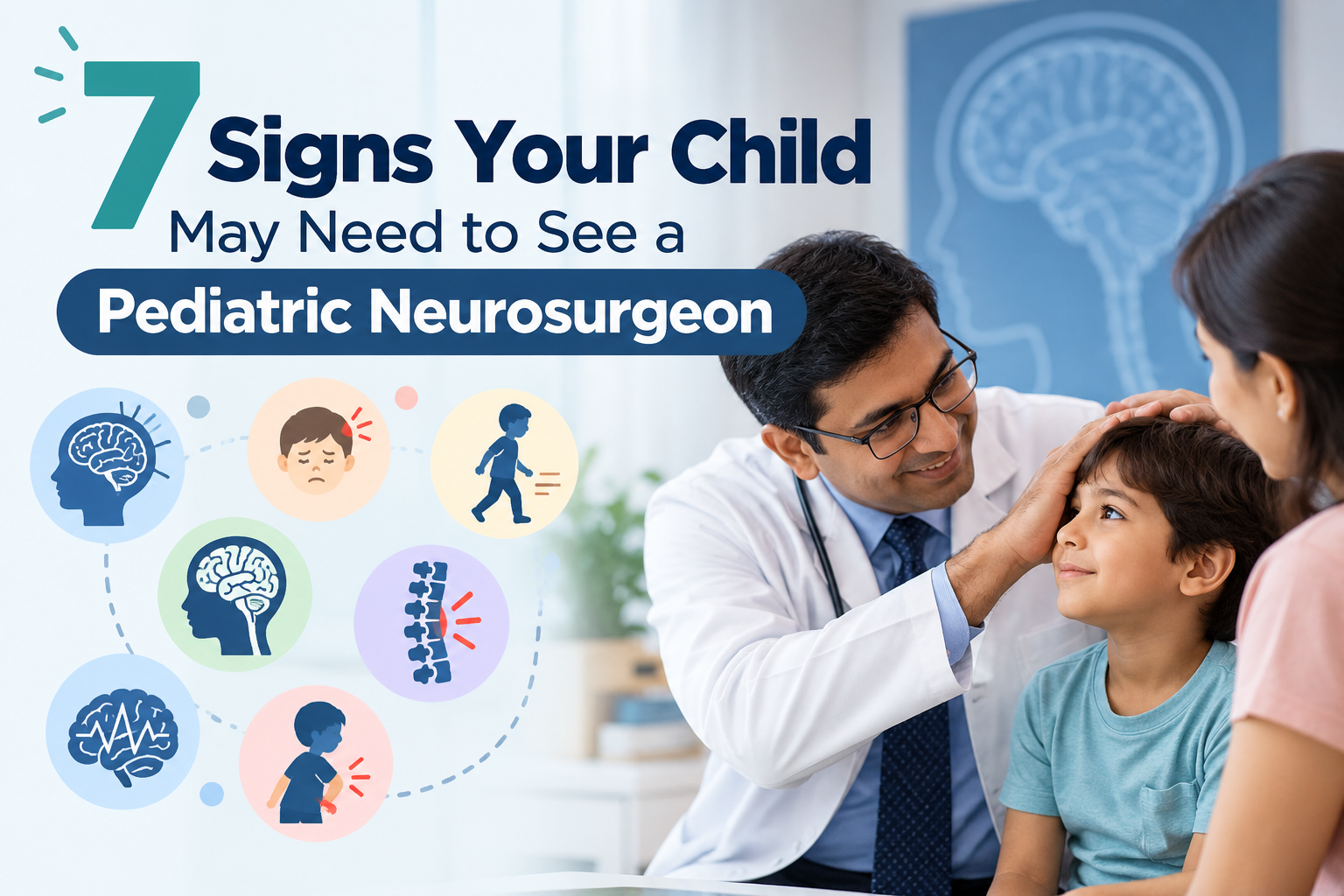
1. Frequent or Unusual Headaches
Headaches are common among children and may occur because of dehydration, lack of sleep, infections, eyesight problems, or migraines. Most childhood headaches do not indicate a serious brain condition. However, medical evaluation is important when headaches are persistent, progressively worsening, or accompanied by other concerning symptoms. Parents should pay particular attention if a child experiences repeated vomiting, changes in vision, unusual sleepiness, difficulty walking, or changes in behaviour along with headaches.
A sudden, extremely severe headache, especially with weakness, confusion, seizures, or reduced consciousness, requires emergency medical assessment. An experienced pediatric neurosurgeon may be involved if the initial evaluation or imaging suggests a structural problem involving the brain. The first step may be consultation with a paediatrician, depending on the symptoms.
2. An Unusually Large or Rapidly Growing Head
During infancy, a baby’s head grows as the brain develops. Doctors routinely measure head circumference during health check-ups to monitor this growth. If a baby’s head grows faster than expected or crosses established growth-chart patterns, the doctor may recommend further evaluation. A large head alone does not necessarily indicate a medical problem, as some children naturally have larger head sizes.
However, a rapidly increasing head circumference accompanied by a tense or bulging soft spot, repeated vomiting, unusual irritability, poor feeding, or downward deviation of the eyes needs prompt medical attention. One possible condition doctors may investigate is hydrocephalus, in which excess cerebrospinal fluid accumulates within the brain’s fluid-filled spaces. Depending on the findings, an experienced pediatric neurosurgeon may recommend monitoring, further tests, or treatment.
3. Seizures or Unusual Episodes of Movement
Watching a child experience a seizure can be frightening for any parent. Seizures may involve shaking movements, stiffening, staring episodes, or temporary loss of awareness. Not every seizure requires neurosurgery. Many childhood seizures are evaluated and treated by a paediatrician or paediatric neurologist. However, a child may need assessment by an experienced pediatric neurosurgeon if investigations identify a structural brain abnormality or another condition that may require surgical treatment.
If a seizure lasts five minutes or longer, another seizure begins before the child has recovered, or the child has difficulty breathing, seek emergency medical assistance. For a first seizure, urgent medical evaluation is important. During a seizure, protect the child from nearby hazards, do not restrain their movements, and do not place anything in their mouth.
4. Delayed Development or Difficulty Walking
Children develop at different rates, but certain developmental changes should not be ignored. Parents may notice that a child has difficulty sitting, standing, walking, or coordinating movements compared with their previous abilities. Some children may also experience unusual stiffness, weakness in the arms or legs, or a loss of previously acquired skills. These signs can have many possible causes, including neurological, muscular, developmental, and other medical conditions. They do not automatically indicate a problem requiring neurosurgery.
A paediatrician can assess the child’s development and recommend appropriate specialists. If a structural problem involving the brain or spine is suspected, consultation with an experienced pediatric neurosurgeon may be considered. A sudden loss of walking ability, new weakness, or difficulty controlling movements needs urgent medical assessment.
5. Head Injuries Following Falls or Accidents
Children are naturally active. They run, climb, play sports, and sometimes fall while exploring their surroundings. Many minor bumps do not cause serious injury, but some head injuries need immediate attention. Warning signs include repeated vomiting, worsening headache, confusion, unusual drowsiness, seizures, unequal pupils, weakness, or loss of consciousness. If any of these symptoms occur after a head injury, seek emergency medical care rather than waiting for a routine appointment. A doctor will assess the injury and determine whether observation, imaging, or specialist consultation is needed. An experienced pediatric neurosurgeon may become involved if the child has a significant brain injury, bleeding inside the skull, or another condition requiring neurosurgical management.
6. Congenital Brain or Spine Conditions
Some children are born with conditions that affect the development of the brain, skull, or spine. These abnormalities may be detected during pregnancy, immediately after birth, or later during childhood. Examples include certain forms of spina bifida, craniosynostosis, and congenital abnormalities involving the brain or spinal cord. The symptoms and treatment needs differ from one child to another. Some conditions require regular monitoring, while others may benefit from timely specialist intervention. Parents should discuss prenatal scan findings, newborn examination results, or concerns raised during routine check-ups with their child’s treating doctor. Early evaluation can help the medical team understand the condition, explain the available options, and plan appropriate follow-up.
7. Persistent Back Pain or Spinal Problems
Back pain in children may result from muscle strain, sports activities, posture, or other common causes. However, persistent pain or pain accompanied by neurological symptoms should be assessed by a medical professional. Parents should seek advice if a child experiences continuing back pain, weakness in the legs, difficulty walking, numbness, or changes in bladder or bowel control.
These symptoms can have several causes, and a specialist evaluation may be needed to identify the underlying problem. New loss of bladder or bowel control accompanied by back pain or leg weakness requires emergency assessment because it may indicate pressure on the spinal cord or nerves. An experienced pediatric neurosurgeon may be involved if investigations identify a spinal cord abnormality, a structural spinal condition, or nerve compression that requires specialist treatment.
Common Conditions a Pediatric Neurosurgeon May Evaluate
The following table provides a simple overview of some conditions that may require paediatric neurosurgical assessment.
| Condition | Possible signs or findings | Why evaluation matters |
|---|---|---|
| Hydrocephalus | Rapid head growth in infants, vomiting, unusual sleepiness | To assess fluid accumulation and pressure within the brain |
| Brain tumours | Persistent headaches, vomiting, seizures, or neurological changes | To investigate a possible structural cause and discuss treatment options |
| Spina bifida | Spinal opening or abnormality, weakness, or bladder problems | To assess spinal development and related complications |
| Craniosynostosis | Unusual skull shape or restricted skull growth | To evaluate the skull’s development and determine whether treatment is needed |
| Brain injury | Confusion, repeated vomiting, reduced consciousness | To identify serious injury and determine appropriate management |
| Spinal cord compression | Weakness, walking difficulties, or changes in bladder function | To identify possible pressure on the spinal cord or nerves |
These signs are not sufficient to diagnose any condition on their own. A qualified doctor must assess the child’s symptoms and medical history before recommending investigations or treatment.
What Happens During a Pediatric Neurosurgeon Consultation?
For many parents, visiting a neurosurgeon for their child can feel worrying. Questions about the diagnosis, tests, and treatment may make them anxious. However, knowing what to expect can make the experience easier. During the consultation, the doctor will ask about the child’s symptoms, when they started, and whether they have changed over time. Parents may also need to share details about birth history, development, previous illnesses, or injuries. The doctor will then examine the child’s movements, strength, balance, and reflexes. If needed, tests such as an MRI or ultrasound may be recommended. After reviewing the findings, the doctor will explain the next steps and answer parents’ questions, helping them make informed decisions about their child’s care.
How Can Parents Prepare for the Appointment?
A little preparation can help parents make the most of a specialist consultation.
- Before the appointment, note down the child’s symptoms, when they began, and whether anything makes them better or worse. Keep copies of previous medical reports, scan results, prescriptions, and referral letters.
- If the child experiences unusual episodes, a written description of what happened and how long it lasted may help the doctor. A video can sometimes be useful when it is safe and appropriate to record one.
- Prepare questions about the suspected condition, recommended tests, treatment alternatives, potential risks, recovery expectations, and follow-up requirements.
- Most importantly, avoid assuming that surgery is inevitable. The purpose of the consultation is to understand the child’s condition and determine the most appropriate course of action.
Finding an Experienced Neurosurgeon in Kolkata for Your Child
Choosing the right specialist is an important decision for any family. Parents should look for a qualified neurosurgeon with relevant experience in evaluating the child’s suspected condition and the ability to explain medical information clearly. When arranging an appointment, ask about the doctor’s qualifications, experience with children, the facilities available for diagnosis and treatment, and whether a paediatric neurologist or other specialist may also need to be involved. Families considering Snayu should review the clinic’s official doctor profile and confirm whether the available consultation services are appropriate for their child’s needs. An experienced Neurosurgeon in Kolkata can help assess relevant brain or spine conditions, explain investigation findings, and discuss appropriate treatment options within their area of expertise. However, the suitability of any specialist depends on the child’s individual medical needs.
Conclusion
A child’s headaches, developmental concerns, unusual head growth, seizures, or spinal symptoms can leave parents with many questions. Although many childhood symptoms have non-surgical explanations, persistent, worsening, or unusual neurological signs deserve proper medical evaluation. An experienced pediatric neurosurgeon, such as Dr. Arijit Chakraborty at Snayu Neuro, can help assess neurological conditions affecting the developing brain, spine, and nervous system. Early assessment can support timely decision-making and help families understand their options without unnecessary fear. If you have concerns about your child’s neurological health, consult a qualified medical professional and seek emergency care for sudden or severe warning signs. The right evaluation can help you understand your child’s condition and the appropriate next steps for their care.
FAQs
1. What does a pediatric neurosurgeon treat?
A pediatric neurosurgeon treats conditions affecting children’s brain, spine, and nervous system, including hydrocephalus, brain tumours, and certain congenital abnormalities.
2. When should I consult a pediatric neurosurgeon for my child?
Consult a specialist if your child has persistent headaches, unusual head growth, developmental concerns, seizures, or suspected brain or spinal conditions.
3. Does Snayu provide pediatric neurosurgery consultations?
Contact Snayu directly to confirm whether pediatric neurosurgery consultations are available and which doctor can evaluate your child’s condition.
4. Who is the doctor at Snayu?
Please check Snayu’s official website for the doctor’s name, qualifications, experience, and specialisation before booking an appointment.
5. How can I book an appointment with a neurosurgeon at Snayu in Kolkata?
Visit Snayu’s official website or contact the clinic directly to confirm appointment availability, consultation timings, and required medical reports.