Our pituitary gland is called the ‘master gland’ for a reason! It plays a vital role in regulating various bodily functions by releasing important hormones. These released hormones play a very important role in controlling other glands and organs. However, a pituitary tumour can develop that can disrupt this process of hormonal regulation in the body. Such a tumour is responsible for compressing nearby structures like the optic nerves, leading to vision problems and other complications. Therefore, to counter this problem, Endoscopic Pituitary surgery becomes necessary. Especially endoscopic pituitary tumour excision, which eliminates the risk of invasive surgeries. In this article, Snayu will shed light on the benefits of Endoscopic Pituitary surgery.
What Is the Modern Endoscopic Pituitary Surgery or Endoscopic Pituitary Tumour Excision?
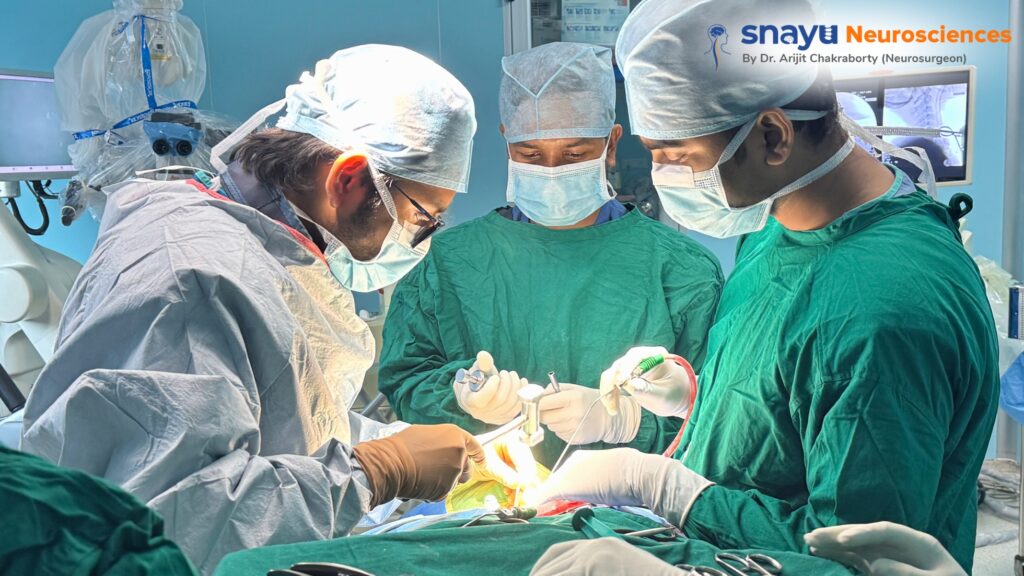
The traditional way of pituitary surgeries was invasive and posed a lot of risks. But with the advent of endoscopic pituitary tumour excision, patients now have access to a safer, less invasive, and highly effective surgical option. This surgery is also known as transsphenoidal endoscopic surgery, which is a minimally invasive procedure. This procedure removes tumours from the pituitary gland through the nasal passage using an endoscope.
The non-invasive endoscopic pituitary surgery involves a thin, rigid tube equipped with a camera, light, and surgical tools. These tools allow our surgeons to access the tumour without external incisions.
| Step No. | Stage | Description |
|---|---|---|
| 1 | Pre-operative Preparation | Patient evaluated (history, MRI), informed consent obtained, anaesthesia consultation, and nasal prep. |
| 2 | Anesthesia & Positioning | General anaesthesia, the patient is positioned supine with head extended, and neuronavigation (if used) is set up. |
| 3 | Nasal Access & Approach | Endoscope inserted, small incision made in nasal septum/turbinate, and sphenoid sinus opened to reach sella. |
| 4 | Sellar Opening & Tumor Resection | Sellar floor bone and dura removed to expose tumor. Instruments used to carefully remove the tumor; bleeding controlled. |
| 5 | Reconstruction & Closure | Sellar defect often reconstructed (e.g., with fascia graft) to prevent CSF leak. Nasal incision typically heals naturally. |
| 6 | Post-operative Care | Patient monitored in recovery, pain managed, endocrine levels checked, nasal care, and follow-up imaging/appointments. |
What are the Benefits of Non-Invasive Endoscopic Pituitary Surgery?
The reason that we fully encourage our patients to opt for endoscopic pituitary tumour excision is due to the minimal nature of the surgery process. Unlike traditional open surgery, our doctors avoid any large incisions. In the endoscopic pituitary tumour excision, the endoscope is inserted through the nostrils. This eliminates the need for opening the skull while avoiding other problems, like no visible scarring. As well as reduced trauma to surrounding brain tissue and a lower risk of complications like infection or bleeding.
On the other hand, unlike traditional surgery, non-invasive endoscopic pituitary surgery is great for fast recovery. Patients after the surgery experience shorter hospital stays, and they are able to quickly return to normal lives. This makes the invasive version of endoscopic pituitary surgery a much preferred option. Many patients are discharged within a few days. Furthermore, their full recovery often takes just a few weeks compared to months with traditional surgery.
Moreover, due to the avoidance of any external cuts or bone removal, patients report significantly less pain and discomfort after surgery. This also reduces the need for strong pain medications during recovery. On the other hand, patients who require additional therapies, such as radiation, can begin treatment sooner. This is because there are no large wounds on the patient that need extended healing time. They can have immediate access to their follow-up treatment.
Reasons to Opt for Endoscopic Pituitary Surgery at Snayu
As mentioned before, advanced tools are used in this modern surgery, like the high-definition camera. Such cameras on the endoscope provide enhanced visualisation of the tumour and surrounding structures. Surgeons can navigate with greater accuracy, which is especially important given the pituitary gland’s proximity to critical areas like the optic nerves and carotid arteries.
Moreover, the goal of surgery is not only to remove the tumour but also to preserve the healthy parts of the pituitary gland. The endoscopic approach allows for more targeted removal, reducing the risk of hormonal imbalances post-surgery. Furthermore, since the procedure avoids external incisions and is performed through natural nasal pathways, the risk of surgical site infections is significantly reduced. This contributes to a safer overall recovery process at Snayu.
| Who Can Benefit from This Procedure? | Potential Risks and Considerations |
|---|---|
| Hormone-secreting tumours (e.g., prolactinomas, Cushing’s disease) | Cerebrospinal fluid (CSF) leaks |
| Non-functioning adenomas causing pressure symptoms like headaches or vision loss | Temporary or permanent hormonal imbalances |
| Select cancerous tumours, often in combination with other treatments | Nasal congestion or discomfort during healing |
| Recurrent tumours after previous surgery | Meningitis & Visual disturbances |
Conclusion
Endoscopic pituitary tumour excision represents a significant advancement in neurosurgery, offering patients a safer, less invasive, and more precise treatment option. With faster recovery, minimal discomfort, and excellent outcomes, it has become the preferred approach for many pituitary tumour cases. If you or a loved one is facing a pituitary tumour diagnosis, consulting with the leading neurosurgeon in Kolkata, found at Snayu, is your best option! Our doctors are experienced in endoscopic pituitary surgery techniques, and they can open the door to a smoother, more confident path to recovery.
FAQs
- How is endoscopic pituitary tumour surgery performed?
- The procedure is done through the nostrils using a thin, rigid tube called an endoscope. This allows the surgeon to access and remove the tumour without making any external incisions, minimising trauma and recovery time.
- What are the main advantages of this surgery over traditional methods?
- Key benefits include no visible scarring, reduced risk of infection, shorter hospital stays, faster recovery, and improved surgical precision due to enhanced visualisation of the tumour and surrounding structures.
- Who is a good candidate for endoscopic pituitary surgery?
- Patients with hormone-secreting tumours, non-functioning adenomas causing pressure symptoms, or recurrent tumours are typically good candidates. Suitability is determined by a neurosurgeon based on imaging and hormonal evaluations.
- What are the potential risks or complications?
- Though generally safe, risks may include cerebrospinal fluid (CSF) leaks, meningitis, hormonal imbalances, nasal discomfort, or visual disturbances. These are rare and often manageable with prompt care.
- What is the typical recovery process like?
- Most patients stay in the hospital for 1–3 days and return to normal activities within a few weeks. Nasal congestion is common initially, and follow-up visits are essential to monitor healing and hormone levels.