The human body relies on the brain as its central command centre, and oxygenated blood is supplied through a complex network of high-pressure vessels. When this vascular system encounters failures, the field of Neurovascular Surgery addresses these issues through specialised medical intervention. However, when this system fails, you need to have a reliable place to carry out the neurovascular surgery in Kolkata.
Remember, if you or a loved one is facing a diagnosis involving the blood vessels of the brain or spine, the road ahead can feel overwhelming. At Snayu Neurosciences, led by the renowned Dr Arijit Chakraborty, that road is paved with precision, cutting-edge technology, and a “patient-first” philosophy. This detailed blog will explore what neurovascular surgery is. Plus, how we can help you or your loved one recover without a hitch.
What is Neurovascular Surgery in Kolkata?
Neurovascular surgery in Kolkata is a specialised field within neurosciences that addresses complex conditions impacting the blood vessels of the brain and spinal cord. This area of surgery involves intricate and high-risk procedures aimed at preventing strokes, managing life-threatening haemorrhages, and restoring healthy blood circulation. These interventions are critical for maintaining neurological health and improving patient outcomes. Broadly, these procedures fall into two categories:
- Open Microsurgery: Traditional surgery where a small opening is made in the skull (craniotomy) to access the vessel directly.
- Endovascular Neurosurgery: A minimally invasive approach in which a catheter is threaded through an artery (usually in the groin or wrist) to the brain, treating the issue from within the vessel.
What are the Conditioned Treated in Neurovascular Surgery in Kolkata
There are primarily three types of conditions that are treated when neurovascular surgery is implemented. For example, in a brain aneurysm condition, an aneurysm is a weak spot in a blood vessel wall that bulges out like a tiny balloon. If it bursts, it causes a subarachnoid haemorrhage, a catastrophic type of stroke.
Therefore, at Snayu, such cases are approached depending on the size and location. Depending on the condition, our doctors may employ Endovascular Coiling, which involves filling the balloon with platinum coils, or Microsurgical Clipping, which involves placing a tiny metal clip at the base.
On the other hand, we can also encounter Arteriovenous Malformations (AVMs). These AVMs are abnormal tangles of blood vessels that disrupt normal blood flow, bypassing healthy brain tissue. They are often congenital and carry a high risk of rupture. At Snayu, we utilise advanced Digital Subtraction Angiography (DSA) to map the tangle with pinpoint accuracy before performing a surgical resection or embolization.
Ischemic and Hemorrhagic stroke are other conditions where a clot blocks blood flow (ischemic) or a vessel bursts (hemorrhagic). Here, every second counts, so we ensure our doctors are equipped for Mechanical Thrombectomy, where a clot-retrieval device is used to “vacuum” out the blockage, often restoring blood flow instantly and preventing permanent disability.
Why Snayu Neurosciences is the Most Reliable Choice for Neurovascular Surgery in Kolkata
Selecting a centre for neurosciences is a significant decision that can greatly impact one’s health journey. Snayu Neurosciences in Kolkata is recognised as a reliable choice for several reasons:
1. The Expertise of Dr Arijit Chakraborty
With a DrNB in Neurosurgery from the prestigious Manipal Hospital and advanced fellowships in minimally invasive techniques, Dr Chakraborty is recognised for his precision. His affiliations with the American Association of Neurological Surgeons (AANS) and the European Association of Neurological Societies (EANS) ensure patients receive internationally-standard care locally.
2. Advanced Technology Suite
Reliability is built on accuracy, which can be seen in how Snayu utilises AI-Guided Stroke Management for rapid detection and decision-making. Furthermore, we also implement Flow Diversion Stents where high-tech mesh tubes that redirect blood flow away from aneurysms without ever “opening” the brain. Moreover, Intraoperative Imaging is used to provide our surgeons with real-time feedback during surgery to ensure 100% success before the patient leaves the OR.
3. Holistic Recovery
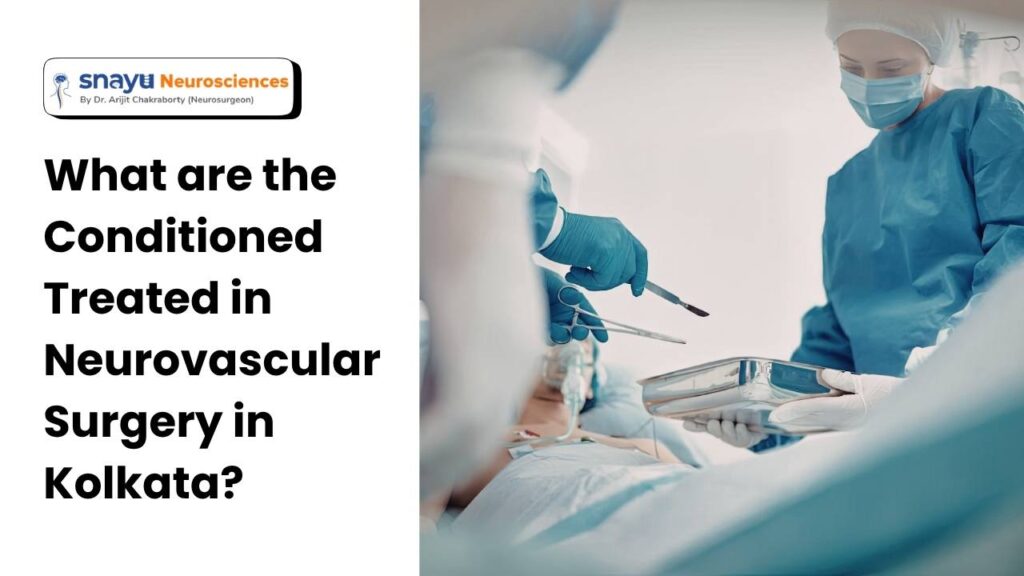
Surgery is just one part of the overall treatment process. At Snayu, we offer dedicated Neuro-Physiotherapy services and specialised Neuro-Pharmacy support to ensure that the post-operative recovery journey is seamless and effective, mirroring the quality care received during surgery.
| Procedure | Method | Primary Goal | Recovery Time |
| Endovascular Coiling | Minimally Invasive (Catheter) | Treat Aneurysms | 2–5 Days |
| Microsurgical Clipping | Open Surgery (Craniotomy) | Permanent Aneurysm Closure | 2–4 Weeks |
| Mechanical Thrombectomy | Catheter-based Clot Removal | Emergency Stroke Treatment | Variable |
| Carotid Endarterectomy | Open Neck Surgery | Prevent Stroke (Plaque Removal) | 1–2 Weeks |
| Flow Diversion | Endovascular Stent | Remodel Vessel Wall | 2–5 Days |
Conclusion
Neurovascular disorders, while complex, have seen significant advancements in treatment options. The emergence of minimally invasive endovascular techniques has transformed many previously challenging cases into successful outcomes. Snayu Neurosciences leverages these advanced technologies alongside the expertise of Dr Arijit Chakraborty, ensuring high-quality care. For those seeking a facility where “precision meets compassion,” Snayu stands out as a trusted choice for neurovascular surgery in Kolkata.
FAQs
- Is endovascular surgery safer than open brain surgery?
- Endovascular procedures are less invasive, require no large incisions, and allow for quicker recovery. The safest option depends on the vascular issue’s location and shape. Dr Chakraborty assesses each case in the context of modern neurosciences to create the best treatment plan.
- How long does it take to recover from an aneurysm treatment at Snayu?
- For endovascular procedures (like coiling), patients often return home within 48 to 72 hours. Open microsurgery typically requires a hospital stay of 5 to 7 days, followed by a few weeks of rest at home.
- What are the warning signs that I might need a neurovascular evaluation?
- Suddenly, “worst-ever” headaches, unexplained vision changes, facial drooping, or weakness on one side of the body should be taken seriously. If you have a family history of aneurysms, a screening via MRA or CTA at Snayu is highly recommended.
- What kind of long-term follow-up is necessary after a neurovascular procedure?
- Recovery continues after leaving the hospital, and most neurovascular procedures need follow-up imaging at 6 months, 12 months, and then annually to monitor treated aneurysms and blood flow. Snayu Neurosciences offers a follow-up program that includes these checks and lifestyle counselling, like managing blood pressure and quitting smoking, to reduce future vascular risks.
- Does a diagnosis of a brain aneurysm or AVM always mean I need immediate surgery?
- At Snayu Neurosciences, we focus on treating the patient, not just the scan. Some small, unruptured aneurysms or low-risk AVMs may require “watchful waiting” with regular imaging to monitor changes. Dr Chakraborty employs a risk-stratification approach to balance the risks of procedures with those of the conditions, avoiding unnecessary interventions.