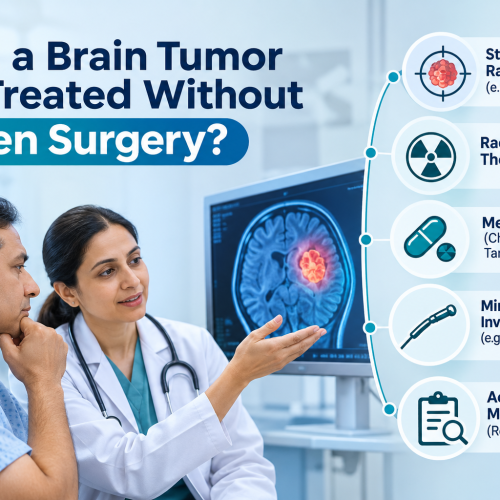
Being diagnosed with a brain tumor can be scary. One of the first questions that comes to mind is, “Will I have to undergo open brain surgery?” But the reality is that not every brain tumor needs a major operation. Depending on the tumor’s size, type, location and growth, doctors may recommend other treatment options. These can include focused radiation, medication, regular monitoring or minimally invasive procedures. However, every case is different. A proper examination by an experienced neurosurgeon is important to understand whether brain tumor open surgery is necessary or if another treatment approach may be suitable.
What Does Brain Tumor Treatment Without Open Surgery Mean?
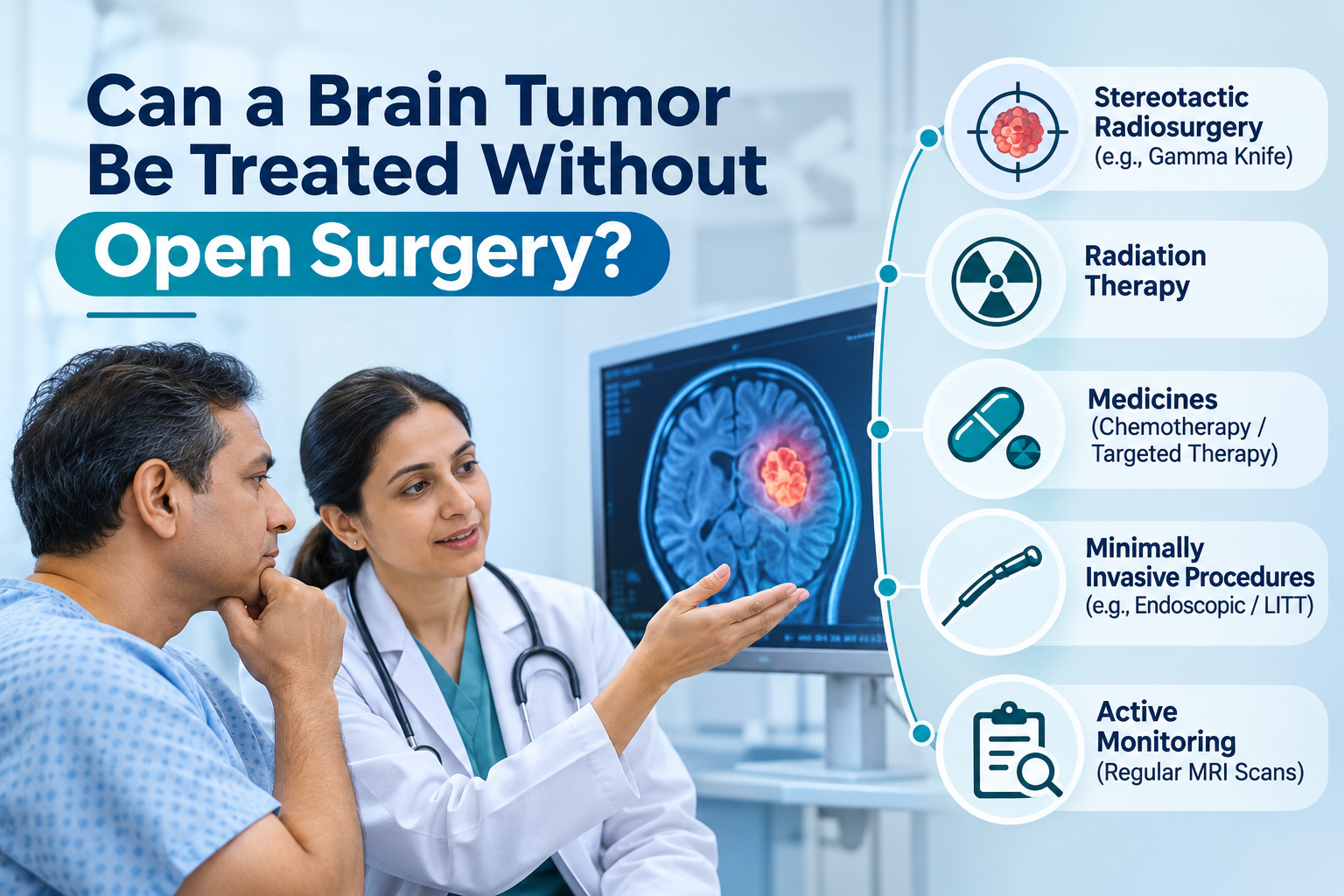
Open brain surgery, often called a craniotomy, involves opening part of the skull to reach the tumor. It may remove tumor tissue, reduce pressure or provide a sample for diagnosis. Treatment without open surgery uses another approach where appropriate. It does not always mean no procedure is needed: a stereotactic biopsy uses a small opening, while radiation does not require a cut. The aim is to control the tumor while protecting speech, movement, memory and vision. Avoiding brain tumor open surgery is possible in selected cases, but safety comes first.
What Are the Treatment Options for a Brain Tumor Without Open Surgery?
Not every brain tumour requires traditional open brain surgery. With advancements in modern neurosurgery, several treatment options are now available that can help control or manage certain brain tumours without making a large surgical opening in the skull. The choice of treatment depends on the tumour’s size, type, location, growth rate and the patient’s overall health. Some patients may benefit from focused radiation, while others may need medication or minimally invasive procedures. Let’s look at some of the treatment options that may help avoid brain tumor open surgery.
1. Stereotactic Radiosurgery: Treatment Without a Surgical Cut
Stereotactic radiosurgery is a non-open-surgical option for selected tumors. Despite its name, it is a focused radiation treatment, with no incision or removal of skull bone. Systems such as Gamma Knife direct planned radiation at a target. This damages tumor cells or slows their growth. Treatment may take one session or several. It may suit selected small, well-defined tumors, including some meningiomas, vestibular schwannomas and brain metastases. It is not suitable for every case, particularly when a tumor is large, causes pressure or needs immediate tissue diagnosis. For suitable patients, it can avoid brain tumor open surgery. Follow-up MRI scans remain important because response may be gradual.
2. Radiation Therapy for Brain Tumors
Radiation therapy uses high-energy rays to damage tumor cells and control growth. External treatment is planned using brain scans. Techniques such as intensity-modulated radiation therapy shape the dose around the target. It may be the main treatment when surgery is unsuitable, or follow surgery if the tumor remains. The number of sessions depends on diagnosis, size, location and treatment goals. External radiation needs no scalp incision. Side effects can include tiredness, headache, nausea or swelling; the team will explain risks and management.
3. Can Medicines Treat a Brain Tumor?
Medicines can treat certain brain tumors. Chemotherapy may be used for specific types, sometimes with radiation. Targeted medicines may help when tests identify particular changes in tumor cells. Response varies. A high-grade glioma may need surgery, radiation and chemotherapy, while other tumors require different plans. Medicines are not a universal replacement for brain tumor open surgery. Steroids may reduce swelling, and anti-seizure medicines may control seizures. These can improve comfort but do not necessarily destroy the tumor.
4. Minimally Invasive Options: Is There an Alternative to a Large Operation?
Some tumors can be approached through smaller openings. Endoscopic procedures use a thin camera-equipped instrument and may suit selected pituitary-region tumors. Laser interstitial thermal therapy (LITT) uses an image-guided probe to heat and destroy targeted tissue. It is minimally invasive, but still an internal procedure, and is not suitable for every tumor. These techniques may reduce the opening or recovery burden, but are not completely non-surgical. A neurosurgeon must weigh benefits against risks.
5. Can Monitoring Be an Option Instead of Brain Tumor Open Surgery?
Sometimes, careful observation is safer than immediate treatment. Called active surveillance, it may suit a slow-growing tumor without significant symptoms. A specialist must review the scans and likely tumor type first. Monitoring involves repeat MRI scans. If the tumor grows or symptoms appear, the plan may change. Observation is not ignoring the tumor; it requires regular review. For some, monitoring may delay brain tumor open surgery. For others, waiting is risky. Discuss its benefits and limits with your doctor.
Symptoms That Should Not Be Ignored
Symptoms of a brain tumour may vary depending on its location. Common warning signs include:
- Frequent or worsening headaches.
- Seizures or fits.
- Blurred vision or other vision changes.
- Weakness in the arms or legs.
- Difficulty maintaining balance.
- Speech or communication problems.
- Memory loss or confusion.
Seek urgent medical attention if you experience a first-time seizure, sudden weakness, speech difficulties, a severe headache, confusion or reduced consciousness. Early medical assessment is important.
What Happens After Treatment?
- Treatment does not end after a procedure or radiation.
- Follow-up visits and MRI scans check whether the tumor is stable, shrinking or growing.
- Some patients also need rehabilitation or support for fatigue.
- Ask which symptoms need an early review. Keep scan reports and treatment records during care.
- Whether or not brain tumor open surgery is used, follow-up is essential.
Which Treatment Is Right for You?
No single treatment suits everyone. Decisions depend on tumor type, grade, size, location, growth and nearby brain structures, as well as the patient’s age, health and symptoms.
| Treatment option | How it works | When it may be considered |
|---|---|---|
| Stereotactic radiosurgery | Delivers focused radiation to the tumor | Selected small, well-defined tumors |
| External radiation therapy | Uses planned radiation from outside the body | Certain primary or secondary brain tumours |
| Chemotherapy or targeted medicines | Uses drugs to affect tumor cells | Specific tumor types and molecular profiles |
| Active monitoring | Tracks the tumor with regular scans | Some slow-growing tumors without concerning symptoms |
| Minimally invasive procedures | Reaches or treats selected targets through small access points | Carefully selected tumors and locations |
| Open surgery | Removes tumor tissue or relieves pressure | When removal, diagnosis or urgent decompression is needed |
This table is a guide, not a recommendation. Similar-looking tumors may need different plans.
How Do Doctors Decide Whether Brain Tumor Open Surgery Is Necessary?
- Doctors review symptoms, medical history and scans. MRI often shows the tumor’s size, position and appearance; CT or other tests may also be needed.
- A biopsy may identify the tumor type. A stereotactic biopsy can collect tissue through a small opening. Sometimes imaging guides decisions when biopsy is unsafe or unnecessary.
- The neurosurgeon weighs whether removal could relieve pressure, improve symptoms or provide a diagnosis. Deep or hard-to-reach tumors may be considered for radiation. The goal is the safest effective plan, not simply avoiding brain tumor open surgery.
When Is Open Brain Surgery Still the Better Option?
Non-surgical treatments cannot replace surgery in every case. An operation may be needed for a large tumor causing pressure, worsening symptoms, tissue diagnosis or better tumor control. Some tumors need combined treatment: surgery followed by radiation or medicines. Emergency surgery may relieve dangerous pressure. Do not delay recommended care to avoid brain tumor open surgery. Ask about the reasons, alternatives, benefits, risks and recovery.
Why Specialist Neurosurgical Assessment Matters
Treatment decisions involve scans, symptoms, examination and overall health. A second opinion may help clarify complex choices.
- At Snayu Neuro, care focuses on evaluation and treatment planning. Dr. Arijit Chakraborty provides care for brain, spine, endovascular and peripheral nerve conditions. Patients can discuss their diagnosis and options with Dr. Arijit Chakraborty.
- Bring scan images, reports, biopsy results and a medicine list. Ask about the treatment goal and follow-up scans.
- A clear conversation can reduce uncertainty. Write down your questions before the appointment, and consider bringing a family member or trusted friend. Understanding the purpose of each test and treatment can help you feel more prepared and involved in decisions.
- A brain tumor does not automatically mean a major operation. Alternatives exist for selected cases, but early assessment, accurate diagnosis and follow-up remain essential.
- If you or a loved one has a brain tumor, consult a neurosurgical specialist. The Snayu Neuro team can explain treatment pathways and help you make an informed decision.
Take the Next Step with the Right Guidance
A brain tumor does not automatically mean that a patient must undergo a major open operation. Modern treatment options may offer alternatives to brain tumor open surgery for selected cases, but no single method is right for everyone. Early assessment, an accurate diagnosis and regular follow-up are essential. If you or someone close to you has been diagnosed with a brain tumor, speak with a neurosurgical specialist before making a decision. Dr. Arijit Chakraborty and the team at Snayu Neuro can help you understand the available treatment pathways and make an informed decision based on your medical needs.
FAQs
1. Can a brain tumor be treated without brain tumor open surgery?
Yes, some brain tumors can be managed without traditional open surgery. Options may include stereotactic radiosurgery, external radiation, medicines or active monitoring. Suitability depends on the tumor and the patient’s condition.
2. Is Gamma Knife treatment the same as brain tumor open surgery?
No. Gamma Knife is a form of stereotactic radiosurgery that uses focused radiation. It does not involve a surgical cut or opening the skull. It is suitable only for selected cases.
3. Can a brain tumor disappear with radiation?
Radiation may shrink some tumors, stop or slow their growth, or control them over time. The response varies by tumor type and treatment. Regular scans are needed to assess the result.
4. Is a small brain tumor always safe to observe?
Not always. Some small, slow-growing tumors may be monitored with regular MRI scans, but others need treatment because of their type, location, growth or symptoms. Monitoring should only happen under specialist guidance.
5. How do I know whether I need brain tumor open surgery?
Only a qualified specialist can recommend a treatment after reviewing your scans, symptoms and diagnosis. Ask for a clear explanation of the options, including why surgery is or is not advised.
Medical note: This article is for general information only. It does not replace a consultation, diagnosis or personalised medical advice from a qualified doctor.