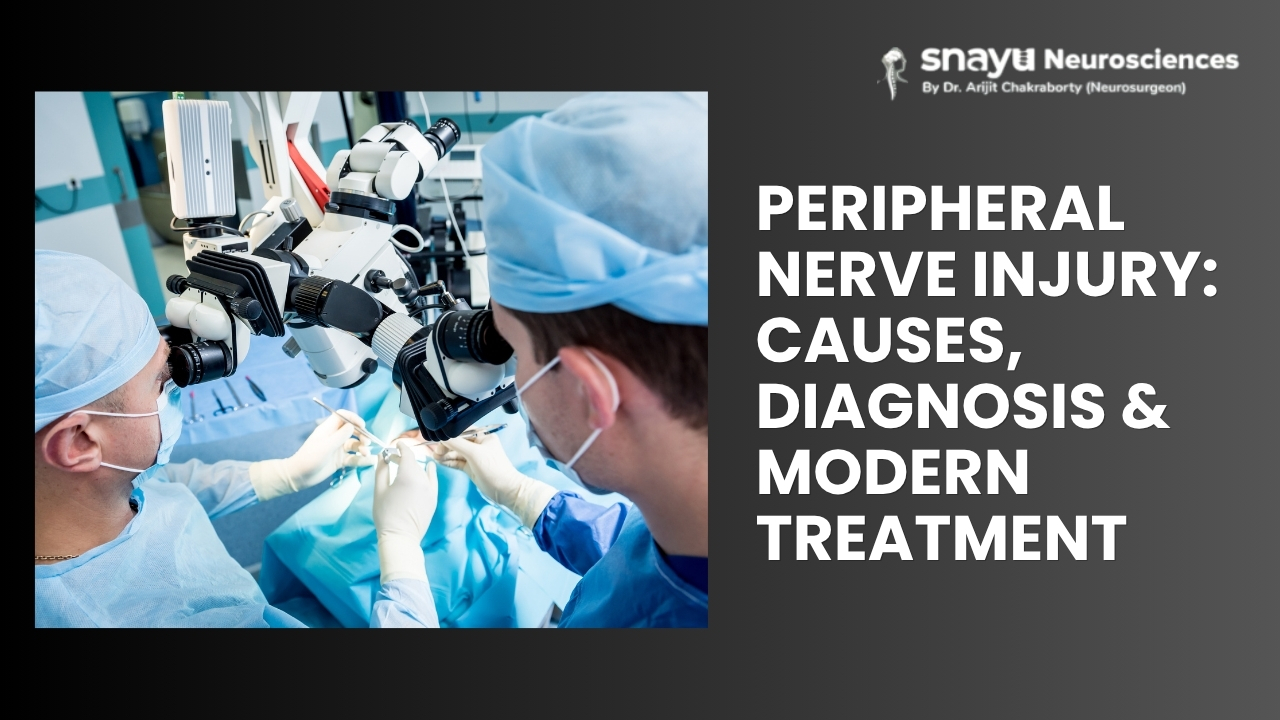
Our body has a network of nerves that works like a communication system between the brain, spinal cord, muscles, and the rest of the body. These nerves help us move, feel touch, sense heat or cold, and perform everyday activities without effort. When a Peripheral Nerve gets damaged, even simple things like walking, holding a glass, writing, or feeling sensations in the hands and legs can become difficult. Sometimes this happens suddenly after an injury or accident, while in other cases it develops slowly because of pressure on the nerve or certain medical conditions. The good news is that today, with advanced diagnosis, rehabilitation, and modern treatment options, many Peripheral Nerve conditions can be treated successfully. At Snayu Neurosciences, under the guidance of Dr Arijit Chakraborty, patients receive personalized care focused on accurate diagnosis, better recovery, and helping them return to daily life with confidence.
What is Peripheral Nerve Injury?
Peripheral nerves are all the nerves outside the brain and spinal cord. These nerves act like communication lines that connect the central nervous system to the rest of the body. They control movement, sensation, and automatic body functions.
A peripheral nerve injury happens when one or more of these nerves become stretched, compressed, inflamed, partially torn, or completely severed. Depending on the severity, symptoms can range from mild tingling to complete loss of movement. These injuries may affect a single nerve or multiple nerves and can occur in the arms, legs, hands, face, or other body regions. Early diagnosis often improves recovery and reduces permanent damage.
Common Causes of Peripheral Nerve Injury
Peripheral nerve injuries can develop for many reasons.
- Trauma remains one of the leading causes.
- Road accidents, sports injuries, deep cuts, fractures, and falls can directly damage nerves.
- Compression injuries are another major cause.
- Conditions such as slipped discs, repetitive movement, prolonged pressure, or swelling around nerves may reduce nerve function over time.
- Medical conditions also contribute significantly.
- Diabetes is one of the most common reasons for nerve damage.
- Infections, autoimmune disorders, vitamin deficiencies, certain medications, and tumours may also affect nerve health.
- Sometimes nerve damage develops gradually, making it difficult to notice until symptoms become severe.
Signs and Symptoms You Should Never Ignore
Symptoms depend on which nerve is affected and how severe the damage is.
- Sensory nerve injury may lead to numbness, burning sensations, tingling, reduced feeling, or increased sensitivity.
- Motor nerve injury often causes muscle weakness, poor coordination, muscle shrinkage, or the inability to move certain body parts.
- Autonomic nerve damage may affect sweating, digestion, blood pressure, or bladder control.
- Some patients notice symptoms immediately after injury, while others experience gradual worsening.
- Persistent weakness, unexplained numbness, or ongoing pain should never be ignored.
Peripheral Nerve Diagnosis: How Doctors Identify the Problem
Finding the exact location and severity of nerve damage requires a structured approach. At Snayu Neurosciences, diagnosis begins with a detailed medical history and neurological examination.
- Doctors assess strength, reflexes, sensation, balance, and movement patterns. Clinical findings often guide further testing.
- Advanced investigations may include nerve conduction studies and electromyography, which measure how well nerves and muscles communicate. Imaging tests such as MRI, ultrasound, or CT scans help identify compression, tears, swelling, or surrounding structural problems.
- Blood investigations may also be advised when underlying conditions like diabetes, infection, or nutritional deficiencies are suspected.
- Accurate diagnosis is important because treatment varies depending on whether the nerve is compressed, inflamed, stretched, or cut.
Peripheral Nerve Injury at a Glance
| Aspect | Details |
| What it affects | Sensation, movement, body functions |
| Common causes | Trauma, diabetes, compression, infection |
| Early symptoms | Tingling, numbness, weakness |
| Advanced symptoms | Muscle loss, severe pain, reduced mobility |
| Diagnosis | Clinical exam, EMG, nerve conduction study, MRI |
| Treatment | Medication, physiotherapy, and surgery |
| Recovery time | Weeks to months, depending on severity |
Modern Treatment Options for Peripheral Nerve Injury
Treatment depends on the type, severity, and duration of nerve damage. Modern treatment aims not only to reduce symptoms but also to restore function and improve quality of life.
- Mild injuries may recover with rest, medication, physiotherapy, and activity modification.
- Anti-inflammatory medicines and pain management strategies can reduce discomfort and allow healing.
- Physiotherapy plays an important role in restoring movement and preventing stiffness. Targeted rehabilitation strengthens muscles and improves nerve response.
- For compressive conditions, image-guided procedures or minimally invasive interventions may help reduce pressure around affected nerves.
- In severe injuries involving nerve tears or complete disruption, microsurgical techniques may be necessary.
- Nerve repair, nerve grafting, and nerve transfer procedures are advanced options designed to reconnect damaged pathways.
- Modern neurosurgical approaches use precision imaging and magnification to maximise recovery while preserving surrounding tissues.
Can Peripheral Nerves Heal Naturally?
One of the most common questions patients ask is whether nerve damage can heal on its own. The answer depends on the extent of injury. Mild nerve compression or stretching may improve gradually over weeks or months. However, complete nerve cuts or prolonged compression usually require medical intervention. Nerves regenerate slowly compared with other tissues. Recovery may happen at a rate of approximately one millimetre per day in favourable situations. Regular follow-up, early rehabilitation, and expert neurological evaluation greatly influence outcomes.
Why Early Treatment Makes a Big Difference
Delaying treatment can reduce the chances of full recovery. Long-standing nerve damage may lead to muscle wasting, chronic pain, reduced mobility, and permanent functional loss. Early medical attention allows specialists to identify reversible causes before long-term complications develop. At Snayu Neurosciences, treatment planning focuses on precision diagnosis, personalised care, advanced imaging support, rehabilitation guidance, and minimally invasive solutions whenever appropriate. The goal is not only symptom control but also helping patients return to daily life with improved function and confidence.
Conclusion
A Peripheral Nerve injury should never be ignored, especially when symptoms continue, worsen, or begin affecting movement, sensation, or daily activities. What may seem like a minor issue in the beginning can gradually impact independence and quality of life if left untreated. The good news is that advances in neurological care, imaging, rehabilitation, and microsurgical techniques have made diagnosis and treatment more precise and effective than before. With timely intervention and the right treatment approach, many patients can achieve meaningful recovery and return to their normal routine. At Snayu Neurosciences, under the expert guidance of Dr Arijit Chakraborty, every patient receives personalised, evidence-based care focused on accurate diagnosis, safer recovery, and better long-term outcomes.
FAQs
- Is peripheral nerve injury always permanent?
No. Many mild and moderate nerve injuries improve with proper treatment and rehabilitation. Recovery depends on the cause, severity, and how early treatment begins.
- How long does nerve recovery take?
Recovery varies widely. Some patients improve within weeks, while severe injuries may take several months or longer.
- Is surgery necessary for all nerve injuries?
No. Surgery is usually considered when conservative treatments fail or when there is severe compression, tearing, or loss of nerve function.
- Can physiotherapy help after nerve damage?
Yes. Physiotherapy helps maintain mobility, strengthen muscles, improve coordination, and support overall recovery.
- Why choose Snayu Neurosciences for Peripheral Nerve treatment?
If you have ongoing numbness, weakness, burning pain, or movement difficulty, consult early. At Snayu Neurosciences, under Dr Arijit Chakraborty, you can receive advanced Peripheral Nerve treatment for better recovery.