According to the best Spine Neuro Doctor in Kolkata, spinal stenosis is a condition that affects many individuals, particularly as they age. It occurs when the spinal canal narrows, putting pressure on the spinal cord and nerves. This can lead to pain, weakness, and mobility issues that significantly impact daily life. Understanding the causes, symptoms, and available treatment options for spinal stenosis is essential for managing and improving quality of life. Dr Arijit Chakraborty will share the causes, symptoms, and treatment options that you can find at the Snayu clinic. Therefore, read this blog to have all your doubts cleared by the end.
Let the Best Neurosurgeon in Kolkata Help You Understand Spinal Stenosis
The spine is a complex structure composed of vertebrae, discs, ligaments, and the spinal cord. The spinal canal, which houses the spinal cord, provides space for nerves to travel and function properly. When this canal narrows due to various factors, spinal stenosis occurs, leading to discomfort and neurological symptoms.
Spinal stenosis can develop gradually over time or be caused by sudden injuries. The most commonly affected areas are the lower back (lumbar spine) and the neck (cervical spine), though it can occasionally occur in the thoracic spine as well. So, what causes spinal stenosis in the first place?
- Degenerative Changes: Aging is the primary cause of spinal stenosis. As the body undergoes natural wear and tear, the vertebrae, discs, and ligaments change. Osteoarthritis, which causes cartilage deterioration, is a common degenerative condition that leads to bone spur formation. These spurs can encroach on the spinal canal, reducing available space.
- Herniated Discs: Intervertebral discs act as cushions between vertebrae. However, when a disc becomes herniated, its inner material protrudes into the spinal canal. This can compress nearby nerves and contribute to stenosis. Disc herniation often results from repetitive stress or sudden trauma.
- Thickened Ligaments: Ligaments play a crucial role in stabilizing the spine. However, over time, they may become thickened due to inflammation and degeneration. This thickening can narrow the spinal canal, leading to symptoms of spinal stenosis.
- Spinal Injuries: Trauma from accidents, falls, or sports-related injuries can cause fractures or dislocations in the spine. In severe cases, bone fragments may enter the spinal canal, causing stenosis.
- Congenital Conditions: Some individuals are born with a naturally narrow spinal canal. While symptoms may not appear early in life, they can develop as the person ages. Conditions such as scoliosis can also contribute to spinal stenosis by altering the spine’s alignment.
- Tumors: Although rare, tumors growing within the spinal canal can put pressure on the spinal cord and nerves, leading to stenosis-related symptoms.
What are the Symptoms of Spinal Stenosis, According to the Best Spine Neuro Doctor in Kolkata?
The symptoms of spinal stenosis vary depending on its location and severity. Common symptoms are Pain and Stiffness. Patients often experience localized pain in the neck, lower back, or affected area. Stiffness can accompany the pain, making movement difficult. But, there are even more symptoms that occur from spinal stenosis, lets learn about them out below.
| Symptoms | Effects |
|---|---|
| Numbness and Tingling | Compression of spinal nerves can cause numbness or tingling sensations in the arms, legs, feet, or hands. This symptom often worsens during physical activity. |
| Muscle Weakness | Prolonged nerve compression can lead to muscle weakness, affecting balance and coordination. Weakness in the legs may result in difficulty walking or standing for extended periods. |
| Pain Radiating Down the Limbs | If spinal stenosis affects the lumbar spine, individuals may experience sciatica—sharp pain radiating down the buttocks and legs. Cervical stenosis can cause similar symptoms in the arms and shoulders. |
| Loss of Bladder or Bowel Control | In severe cases, spinal stenosis can affect the nerves responsible for bladder and bowel control. This requires urgent medical attention. |
| Relief When Sitting or Leaning Forward | Unlike other spinal conditions, many people with spinal stenosis feel relief when sitting or bending forward. This position temporarily alleviates pressure on the spinal cord. |
How Snayu Carries Out the Best Diagnosis of Spinal Stenosis?
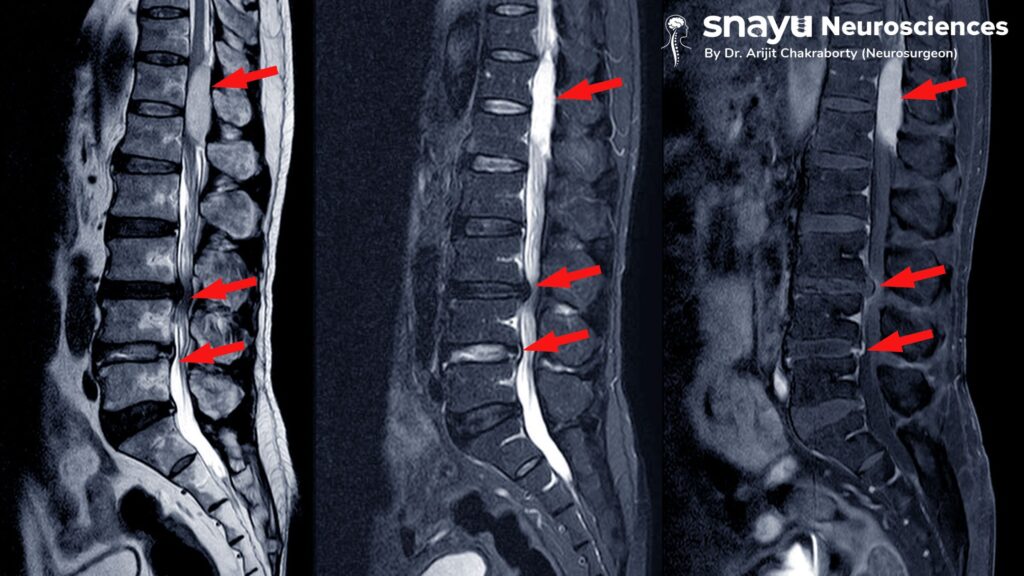
The best spine Neuro Doctor uses various diagnostic methods at Snayu to confirm spinal stenosis. For example, we do a physical examination that evaluates pain, mobility, reflexes, and muscle strength. Furthermore, we use X-rays to detect changes such as bone spurs or misaligned vertebrae. We also employ MRI Scans that provides detailed images of soft tissues, discs, and nerve compression. Lastly, to gain more details, CT Scans is used to helps visualize bone structures and the narrowing of the spinal canal.
Treatment Options for Spinal Stenosis by the Very Best Spine Neuro Doctor in Kolkata
According to Dr Chakraborty, treatment depends on the severity of symptoms. Options range from conservative management to surgical intervention. Such as Non-Surgical Treatments for mild to moderate cases. At Snayu, we often recommend non-invasive treatments. Let us go through them one by one:
1. Medications
- Pain Relievers – NSAIDs such as ibuprofen or acetaminophen help manage inflammation.
- Antidepressants – These are sometimes prescribed for chronic nerve pain.
- Muscle Relaxants – Useful for alleviating muscle spasms.
2. Physical Therapy
Strengthening exercises can improve flexibility and posture, reducing strain on the spine. A physical therapist can design personalized routines to enhance mobility.
3. Steroid Injections
Corticosteroid injections are sometimes used to reduce inflammation around compressed nerves. While they provide temporary relief, they are not a long-term solution due to potential side effects.
4. Lifestyle Modifications
- Maintaining Good Posture – Proper ergonomics reduce spinal pressure.
- Low-Impact Exercise – Swimming, walking, and stretching improve mobility.
- Weight Management – Excess weight adds stress to the spine.
Surgical Treatments Carried Out by the Top Neuro Surgeon in Kolkata
The best spine neuro doctor in Kolkata recognises that for severe cases where non-surgical methods are ineffective, surgery may be necessary. This includes surgeries like Laminectomy, which is the most common procedure for spinal stenosis. Laminectomy involves removing part of the vertebra (lamina) to create space for the spinal cord. But, there are several other methods that can be implemented such as,
- Foraminotomy: This procedure widens the foramen—openings where nerves exit the spinal canal—to reduce compression.
- Spinal Fusion: In cases of spinal instability, fusion surgery connects vertebrae using bone grafts or metal implants.
- Minimally Invasive Procedures: Laser surgery and microscopic decompression techniques offer alternatives with shorter recovery times.
Living with Spinal Stenosis Under the Guidance of the Top Spine Neuro Doctor in Kolkata
While spinal stenosis can be challenging, proactive management can improve the quality of life. Here are some tips:
| Stay Active | Gentle exercises help maintain flexibility. |
| Practice Proper Body Mechanics | Avoid heavy lifting and bending improperly. |
| Use Assistive Devices | Canes or walkers can support mobility. |
| Seek Support | Connecting with others who have spinal stenosis can be reassuring and informative. |
Conclusion
Spinal stenosis is a common condition that affects many individuals, particularly as they age. While it can lead to pain and mobility issues, understanding its causes, symptoms, and treatment options can empower individuals to manage their condition effectively. Whether through lifestyle modifications, medications, physical therapy, or surgical intervention, there are various ways to alleviate discomfort and maintain an active life. At Snayu, you can get under the guidance of the best Spine Neuro Doctor in Kolkata, like Dr Arijit Chakraborty, who can help you get better day by day. Therefore, if you suspect you have spinal stenosis, consult a Snayu for an accurate diagnosis and personalized treatment plan. Early intervention can help prevent complications and improve long-term outcomes.
FAQs
- What is spinal stenosis, and who is most at risk of developing it?
- Spinal stenosis is the narrowing of the spinal canal, which can compress the spinal cord and nerves. It is most common in individuals aged 50 and above due to degenerative changes in the spine. However, younger people with congenital conditions or spine injuries can also develop it.
- What are the early warning signs of spinal stenosis?
- Early symptoms include pain in the back or neck, numbness or tingling in the limbs, and occasional muscle weakness. These symptoms may worsen over time, especially during physical activity, but often improve when sitting or leaning forward.
- How is spinal stenosis diagnosed?
- Doctors at Snayu diagnose spinal stenosis through a combination of physical examinations, imaging tests like X-rays, MRIs, or CT scans, and an evaluation of your medical history to pinpoint the root cause.
- Can spinal stenosis be cured without surgery?
- Many cases of spinal stenosis are managed without surgery through treatments like physical therapy, medications, steroid injections, and lifestyle modifications. Surgery is typically considered for severe cases where conservative treatments fail to provide relief.
- What is the recovery time for spinal stenosis surgery?
- Recovery times vary depending on the type of surgery performed and individual health conditions. Minimally invasive surgeries may require weeks for recovery, while more extensive procedures like spinal fusion could take several months for full rehabilitation.