What if that constant headache, sudden numbness, or unexplained weakness is your body trying to warn you? Neurological problems can sometimes begin with small signs that are easy to ignore. A neurosurgeon does much more than perform brain surgery. They diagnose and treat conditions affecting the brain, spine, spinal cord, and nerves. Knowing when to seek expert help can make an important difference in early diagnosis and treatment. At Snayu Neurosciences, Dr. Arijit Chakraborty, the best neurosurgeon in Kolkata, provides specialised care for various brain, spine, and nerve conditions.
What and How Does the Best Neurosurgeon Treat?
A neurosurgeon is a medical specialist who diagnoses and treats conditions involving the nervous system, including the brain, spinal cord, spine, and peripheral nerves. Not every patient who visits a neurosurgeon needs surgery. A neurosurgeon first evaluates the symptoms, reviews the patient’s medical history and diagnostic reports, and then recommends the most suitable treatment plan. Depending on the condition, treatment may include observation, medication, rehabilitation, minimally invasive procedures, or surgery.
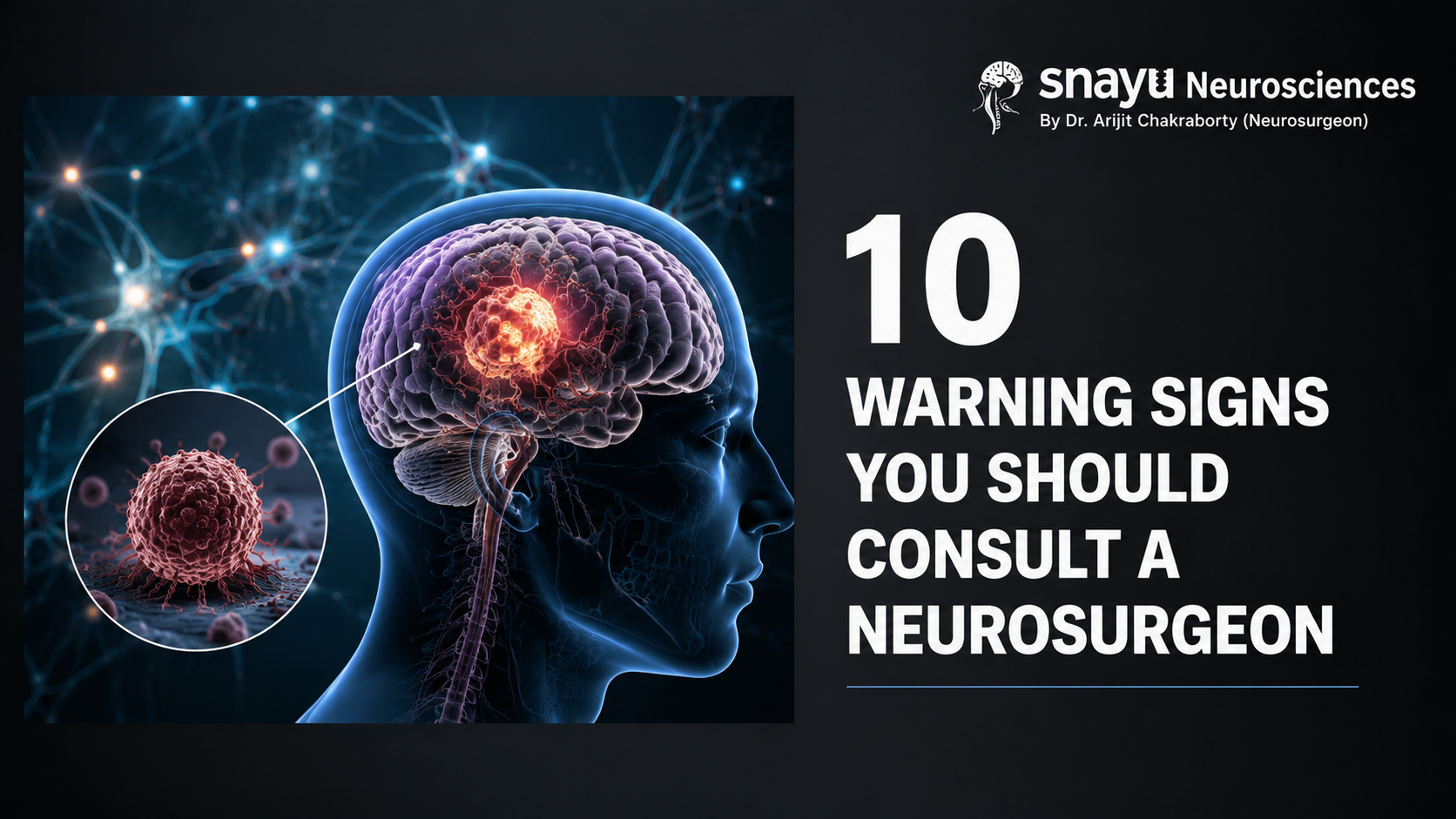
10 Warning Signs That May Require the Best Neurosurgeon’s Attention
Neurological problems do not always begin with severe or obvious symptoms. Sometimes, small changes in your body can be early signs of a condition affecting the brain, spine, spinal cord, or nerves. Knowing what to watch for can help you seek medical advice at the right time. Here are 10 warning signs that should not be ignored:
1. Frequent or Severe Headaches
Headaches are common, but headaches that are unusually severe, keep returning, or gradually worsen need attention. If they occur with vomiting, vision problems, confusion, weakness, or seizures, medical evaluation is important. A sudden, extremely severe headache requires immediate medical attention.
2. Persistent Neck or Back Pain
Neck or back pain that continues for weeks or gets progressively worse may indicate an underlying spine or nerve problem. Pain that spreads to the arms or legs, especially with numbness or weakness, should be evaluated by a specialist.
3. Numbness or Tingling That Does Not Go Away
Temporary numbness is usually harmless, but persistent or recurring tingling in the hands, arms, feet, or legs may indicate nerve compression or a spinal condition. If the sensation spreads or occurs with weakness, it is important to seek medical advice.
4. Weakness in the Arms or Legs
Difficulty holding objects, climbing stairs, standing, or walking normally may indicate a problem affecting the brain, spine, or nerves. Sudden weakness, particularly on one side of the body, can be a medical emergency and requires immediate attention.
5. Problems With Balance and Coordination
Frequent loss of balance, unexplained falls, or difficulty walking in a straight line should not be ignored. Persistent coordination problems may sometimes be linked to a condition affecting the brain or nervous system and require proper evaluation.
6. Seizures
Seizures can cause uncontrolled movements, confusion, loss of awareness, or unresponsiveness. A first-time seizure should always be medically evaluated, as it may sometimes be associated with an underlying condition affecting the brain.
7. Changes in Vision or Speech
Blurred or double vision, sudden vision loss, slurred speech, or difficulty finding words can be neurological warning signs. If these symptoms appear suddenly, seek emergency medical attention. Persistent changes should also be properly investigated.
8. Memory Loss or Changes in Behaviour
Significant changes in memory, personality, concentration, or behaviour may sometimes indicate an underlying neurological problem. If these changes are progressive or begin affecting everyday activities, a detailed medical evaluation may be necessary.
9. Loss of Bladder or Bowel Control With Back Pain
Sudden loss of bladder or bowel control along with severe back pain, leg weakness, or numbness can indicate serious nerve compression in the spine. These symptoms require urgent medical attention to reduce the risk of permanent nerve damage.
10. Symptoms After a Serious Head or Spine Injury
Symptoms such as severe headaches, vomiting, confusion, unusual sleepiness, weakness, numbness, or difficulty moving after a head or spine injury should be evaluated quickly. Some complications may develop hours or even days after an injury, so new or worsening symptoms should not be ignored.
Quick Guide: When Should You Seek the Best Neurosurgeon?
| Warning Sign | When to Be Concerned |
| Severe headache | Sudden, unusual, or progressively worsening |
| Back or neck pain | Persistent pain with weakness or numbness |
| Numbness | Repeated, spreading, or not improving |
| Limb weakness | Sudden or gradually worsening |
| Balance problems | Frequent falls or difficulty walking |
| Seizures | First-time or unexplained seizures |
| Vision or speech changes | Sudden or persistent changes |
| Memory or behaviour changes | Significant or progressive changes |
| Bladder or bowel problems | Especially with severe back pain or leg weakness |
| Head or spine injury | New neurological symptoms following an injury |
When Should You Seek Emergency Care?
Some neurological symptoms require immediate medical attention rather than waiting for a scheduled consultation. Sudden weakness on one side of the body, loss of consciousness, a first-time seizure, sudden difficulty speaking, an extremely severe headache, or loss of bladder or bowel control combined with severe back pain can indicate a medical emergency. Getting prompt medical evaluation in these situations can be extremely important for identifying the cause and starting appropriate treatment without unnecessary delay.
Does Consulting the Best Neurosurgeon Mean You Need Surgery?
Consulting a neurosurgeon does not automatically mean that you will need an operation. This is one of the most common misconceptions about neurosurgical care. The first step is to understand what is causing your symptoms. A neurosurgeon may review your MRI, CT scan, or other medical reports and conduct a detailed clinical examination. Depending on the diagnosis, treatment may involve medication, physiotherapy, lifestyle changes, regular observation, minimally invasive treatment, or surgery. Surgery is generally considered when it is medically appropriate and offers a suitable treatment option for the patient’s specific condition.
Why Early Diagnosis Matters
Conditions involving the brain, spine, spinal cord, and nerves can sometimes become more complicated when they remain untreated. For example, prolonged nerve compression may gradually lead to increasing weakness, numbness, or loss of sensation. Similarly, certain brain conditions may initially cause mild symptoms that become more noticeable over time. Early medical evaluation can help doctors identify the underlying cause and recommend an appropriate treatment plan. The purpose is not to create fear around every headache or episode of back pain but to recognise symptoms that are unusual, persistent, progressive, or severe.
Consult Snayu Neurosciences for Brain and Spine Care
If you are experiencing persistent or unusual symptoms related to the brain, spine, spinal cord, or nervous system, seeking a specialist consultation can help you understand the possible cause. Snayu Neurosciences provides specialised neurosurgical care for patients with different brain and spine conditions. Under the guidance of Dr. Arijit Chakraborty, the best neurosurgeon in Kolkata, patients receive careful evaluation and treatment planning based on their individual medical needs. The focus remains on accurate diagnosis and choosing an appropriate treatment approach, including advanced and minimally invasive neurosurgical techniques when suitable.
Conclusion
Don’t let your body’s warning signs go unheard. Persistent headaches, unexplained weakness, numbness, seizures, balance problems, or severe back pain may be signals that need medical attention. While these symptoms do not always indicate a serious condition or the need for surgery, getting the right evaluation at the right time can make a difference. At Snayu Neurosciences, Dr. Arijit Chakraborty provides best neurosurgical care in Kolkata for various brain, spine, and nerve conditions. If unusual symptoms are affecting your daily life or becoming worse, seeking expert advice early can help you understand the cause and take the right step toward better neurological health.
FAQs
1. What conditions are treated at Snayu Neurosciences?
Snayu Neurosciences provides specialised care for various conditions affecting the brain, spine, spinal cord, and nervous system. The appropriate treatment approach depends on the patient’s symptoms, diagnosis, overall health, and individual medical condition.
2. Who is the best neurosurgeon at Snayu Neurosciences?
Dr. Arijit Chakraborty is associated with Snayu Neurosciences and provides specialized neurosurgical evaluation and treatment for different conditions involving the brain, spine, and nervous system.
3. Should I visit Snayu Neurosciences for persistent headaches?
Persistent headaches can occur for many reasons and do not always indicate a condition that requires neurosurgical treatment. However, headaches that are unusually severe, becoming progressively worse, or accompanied by vomiting, seizures, weakness, or vision changes should be medically evaluated.
4. Does every patient who consults a neurosurgeon need surgery?
No. Consulting a neurosurgeon does not mean surgery will automatically be recommended. The doctor first evaluates the patient’s symptoms and medical reports to identify the underlying problem. Depending on the diagnosis, non-surgical treatment, monitoring, rehabilitation, or surgery may be recommended.
5. When should I seek urgent medical care instead of waiting for an appointment?
You should seek emergency medical attention if you experience sudden weakness, an extremely severe headache, loss of consciousness, a first-time seizure, sudden difficulty speaking, or loss of bladder or bowel control with severe back pain. These symptoms may require immediate medical evaluation.