The idea of brain surgery can feel overwhelming, but not every brain operation requires a large opening in the skull. Advances in modern neurosurgery have made it possible to treat certain brain conditions through smaller and more focused surgical openings. This approach is commonly known as keyhole brain surgery. It is designed to reach specific areas of the brain while reducing unnecessary disturbance to surrounding healthy tissues. However, it is not suitable for every condition or patient. At Snayu Neurosciences, Dr. Arijit Chakraborty provides specialized neurosurgical evaluation and treatment planning based on each patient’s individual condition and medical needs.
What Is Keyhole Brain Surgery?
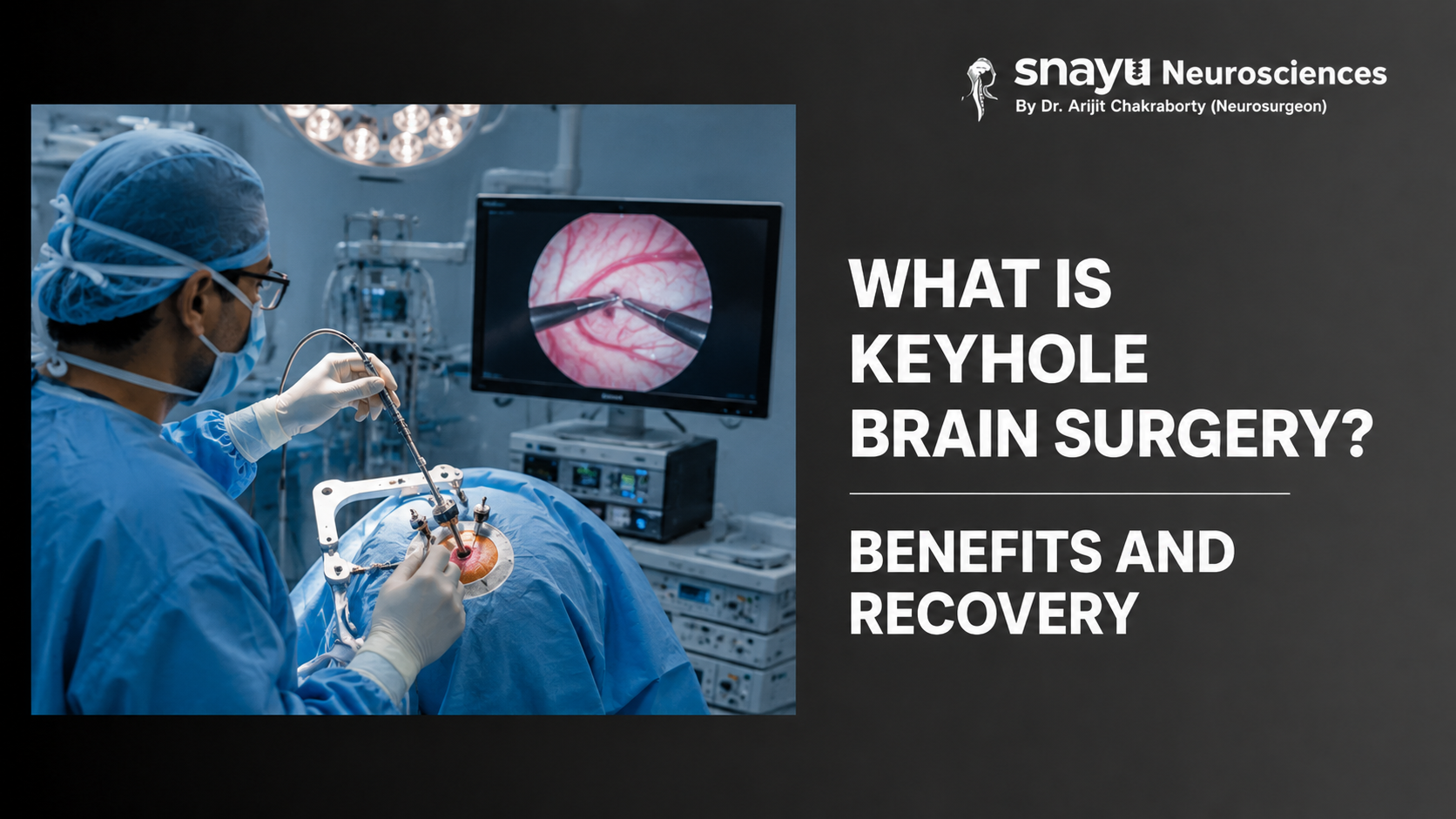
It is a minimally invasive neurosurgical approach in which a surgeon reaches the affected area through a relatively small opening in the skull. Instead of creating a larger surgical opening, the procedure uses a carefully planned route to access the tumour, blood vessel, or other area that requires treatment. Specialised surgical instruments, microscopes, endoscopes, and advanced imaging may be used depending on the procedure. The goal is not simply to make a smaller opening but to choose the safest and most direct route to the affected area while protecting important brain structures. The exact technique varies according to the patient’s diagnosis, the location of the problem, and the complexity of the condition.
How Does Keyhole Brain Surgery Work?
Before surgery, the neurosurgical team carefully studies MRI scans, CT scans, and other diagnostic information. These images help identify the exact location of the condition and its relationship with important nerves, blood vessels, and areas of the brain. During the procedure, the surgeon creates a small opening at a carefully selected location. Specialised instruments are then used to reach and treat the affected area. Depending on the condition, the surgeon may remove a tumour, treat a blood vessel problem, collect tissue for diagnosis, or perform another necessary procedure. The surgical approach is individually planned because every patient’s brain anatomy and medical condition are different.
What Conditions Can Be Treated With Keyhole Brain Surgery?
Keyhole techniques may be considered for selected brain tumours, skull base tumours, pituitary tumours, cysts, and certain vascular conditions. In some cases, these approaches may also help surgeons reach areas located deep within the brain through carefully planned surgical pathways. However, not every neurological condition can be treated using a keyhole approach. Large, complex, or difficult-to-access conditions may require a traditional surgical procedure. The decision depends on the location and size of the problem, surrounding structures, and the patient’s overall health. A detailed evaluation by an experienced neurosurgeon is necessary to determine whether keyhole surgery is appropriate.
Key Benefits of Keyhole Brain Surgery
Keyhole brain surgery offers a focused, minimally invasive approach aimed at safe and effective treatment with less impact on surrounding tissues.
1. Smaller Surgical Opening
One of the main features of keyhole brain surgery is the smaller opening used to access the affected area. A carefully selected surgical pathway may reduce unnecessary exposure of surrounding tissues. The size and location of the opening depend on the condition being treated and the safest route identified by the surgeon.
2. Less Disturbance to Surrounding Tissue
A focused surgical route may help reduce unnecessary disturbance to healthy tissues around the treatment area. Modern visualisation and specialised instruments allow the surgeon to work through a smaller space while maintaining a clear view of important structures. Protecting healthy brain tissue remains one of the most important goals of any neurosurgical procedure.
3. Potentially Less Postoperative Discomfort
Because the surgical opening may be smaller, some patients may experience less discomfort after certain keyhole procedures compared with more extensive approaches. However, the amount of pain and discomfort varies between patients and depends on the location, complexity, and type of operation performed.
4. Shorter Hospital Stay in Selected Cases
Some patients undergoing minimally invasive procedures may have a shorter hospital stay, depending on their condition and recovery. However, discharge is based on neurological health, mobility, symptoms, and overall medical stability rather than the size of the surgical opening alone.
5. Faster Return to Regular Activities
A less extensive surgical approach may support faster recovery for selected patients. Some people may gradually return to normal daily activities sooner, while others may need more time. Recovery depends on the underlying condition, type of surgery, age, overall health, and neurological status.
6. Smaller Visible Scar
A smaller incision may result in a less noticeable surgical scar in some cases. Surgeons may also plan the incision around natural skin lines or the hairline where appropriate. However, cosmetic results vary, and the primary focus of surgery remains safe and effective treatment.
Keyhole Brain Surgery at a Glance
| Feature | What It May Mean for Patients |
| Smaller opening | More focused access to the affected area |
| Precise surgical route | Reduced unnecessary tissue disturbance |
| Advanced visualisation | Clearer view of important structures |
| Smaller incision | Potentially less visible scarring |
| Focused procedure | May support smoother recovery in selected cases |
| Individual planning | Treatment based on the patient’s specific condition |
Is Keyhole Brain Surgery Safe? Understanding the Possible Risks
Keyhole brain surgery can be a safe and effective option for selected patients, but it is not always safer than traditional surgery. The right approach depends on the condition, its location, and the level of access required. Like any brain operation, keyhole surgery may involve risks such as bleeding, infection, brain swelling, seizures, or neurological changes affecting movement, speech, or vision. Careful planning is especially important when operating near critical areas of the brain. A neurosurgeon evaluates each patient individually to compare the benefits and possible risks before recommending the most suitable and safest surgical approach for treatment.
What Happens During Recovery?
Recovery after the surgery varies from one patient to another. Some patients may begin moving and performing basic activities relatively soon after surgery, while others may require more time and support. During the early recovery period, patients may experience tiredness, mild headaches, discomfort around the surgical area, or temporary difficulty concentrating. Doctors closely monitor neurological function and check for any signs of complications. Patients should avoid strenuous activities until their medical team confirms that it is safe to resume them. Adequate rest, proper nutrition, wound care, and following prescribed medicines are important parts of recovery.
When Should You Contact Your Doctor After Surgery?
Patients should follow all discharge instructions and report unusual or worsening symptoms promptly. Severe or increasing headaches, repeated vomiting, fever, wound problems, new weakness, seizures, confusion, or sudden changes in speech or vision require medical attention. Not every symptom after surgery indicates a serious complication, but new or rapidly worsening neurological symptoms should never be ignored. Staying in contact with the medical team during recovery can help identify and manage problems early.
Keyhole Brain Surgery at Snayu Neurosciences
Choosing the right surgical approach begins with an accurate diagnosis and detailed evaluation. At Snayu Neurosciences, patients receive specialised assessment and treatment planning for different brain and neurological conditions. Dr. Arijit Chakraborty provides specialised neurosurgical care based on each patient’s symptoms, imaging findings, diagnosis, and overall health. When a minimally invasive or keyhole approach is medically suitable, treatment planning focuses on reaching the affected area through an appropriate surgical pathway while protecting important surrounding structures.
Conclusion
Keyhole brain surgery is an advanced approach that allows selected brain conditions to be treated through a smaller and carefully planned surgical opening. Potential benefits may include less disturbance to surrounding tissues, smaller incisions, and smoother recovery for suitable patients. However, the technique is not appropriate for every neurological condition. At Snayu Neurosciences, Dr. Arijit Chakraborty provides specialized neurosurgical evaluation and treatment planning based on individual patient needs. If you have been advised to consider brain surgery, understanding whether a keyhole approach is suitable can help you discuss your options and make a more informed decision about your treatment.
FAQs
1. Is Keyhole Brain Surgery Suitable for Every Brain Tumour?
No. Suitability depends on the tumour’s size, type, location, and relationship with important brain structures. A neurosurgeon must evaluate each case individually.
2. Is Keyhole Brain Surgery Completely Risk-Free?
No brain surgery is completely free from risk. Possible complications include bleeding, infection, swelling, seizures, and neurological changes. Individual risks depend on the condition and procedure.
3. How Long Will I Stay in the Hospital?
Hospital stay varies between patients. It depends on the procedure performed, neurological condition, recovery progress, and overall medical stability.
4. Will There Be a Scar After Keyhole Brain Surgery?
There will usually be an incision, but the scar may be smaller or less noticeable than with some traditional approaches. The exact appearance varies according to the surgical location and healing.
5. Does Snayu Neurosciences Provide Minimally Invasive Neurosurgical Care?
Snayu Neurosciences provides specialised evaluation and neurosurgical treatment planning for different brain conditions. The most appropriate surgical approach is selected based on each patient’s individual medical needs.
6. How Long Does Recovery Take After Keyhole Brain Surgery?
Recovery time varies for each patient. Some may return to daily activities within a few weeks, while others may need longer. The timeline depends on the type of surgery, overall health, and neurological condition. Regular follow-ups help determine when normal activities can be safely resumed.