Hearing that you may need brain tumour surgery can naturally bring many questions. Is the surgery risky? What are the chances of success? Will the tumour be completely removed? Brain tumour surgery is a complex procedure, but modern technology, detailed planning, and specialised neurosurgical techniques have made treatment more precise. Still, every patient and every brain tumour is different. The risks and expected results depend on several important factors. At Snayu Neurosciences, Dr. Arijit Chakraborty provides specialised neurosurgical care based on each patient’s individual condition. Understanding the risks and success factors can help patients make informed treatment decisions.
Understanding the Possible Risks of Brain Tumour Surgery
Every major surgical procedure has possible risks, and brain tumour surgery is no different. However, the level of risk varies greatly from one patient to another. A tumour located near important areas of the brain may make surgery more complex than a tumour in an easily accessible location. Understanding these possible risks can help patients and their families have clearer discussions with their medical team.
1. Bleeding During or After Surgery
The brain contains many important blood vessels, making bleeding a possible risk during brain tumour surgery. Neurosurgeons use careful planning and specialised surgical techniques to reduce and control bleeding. In some cases, bleeding can also develop after the operation, which is why patients are closely monitored during the early recovery period.
2. Infection
Infection is a possible complication of any surgical procedure. After brain surgery, infection may develop around the surgical wound or, less commonly, deeper within the operated area. Following proper wound-care instructions and attending scheduled follow-up appointments can help identify possible signs of infection early.
3. Brain Swelling
Some swelling around the surgical area can occur after brain tumour surgery. Excessive swelling may cause headaches, confusion, weakness, or other neurological symptoms. Doctors carefully monitor patients after surgery and may use appropriate medicines to control swelling and support a safer recovery.
4. Movement or Sensory Problems
When a tumour is located near an area responsible for movement or sensation, surgery may carry a risk of weakness, numbness, or coordination problems. These changes may sometimes be temporary, although recovery varies between patients. Rehabilitation may be recommended when necessary to help improve movement and daily functioning.
5. Speech, Memory, or Vision Changes
Certain areas of the brain control speech, memory, understanding, and vision. Surgery near these areas requires careful planning. Depending on the tumour’s location and complexity, some patients may experience temporary or persistent changes in these functions. Protecting important healthy brain tissue remains an important part of surgical planning.
6. Seizures
Some patients with brain tumours experience seizures before surgery, while others may develop them during the recovery period. Surgery can sometimes temporarily irritate brain tissue and increase seizure risk. Doctors may recommend medication when appropriate and carefully monitor the patient’s condition after the procedure.
Brain Tumour Surgery Risks at a Glance
| Possible Risk | What It May Cause |
| Bleeding | Complications during or after surgery |
| Infection | Problems around the wound or operated area |
| Brain swelling | Headaches, weakness, or confusion |
| Movement changes | Weakness or coordination difficulties |
| Sensory problems | Numbness or changes in sensation |
| Speech or memory changes | Difficulty with communication or thinking |
| Vision problems | Temporary or persistent visual changes |
| Seizures | Abnormal electrical activity in the brain |
What Factors Influence the Success of Brain Tumour Surgery?
Success in brain tumour surgery does not always mean removing every part of the tumour. For some patients, complete removal may be possible and appropriate. For others, safely removing as much as possible while protecting important brain functions may be considered a successful outcome. Several factors can influence the result of surgery.
1. Location of the Tumour
The location of a brain tumour is one of the most important factors affecting surgery. Tumours close to the surface may sometimes be easier to reach, while tumours located deep inside the brain or near areas controlling speech, movement, vision, or other important functions can be more challenging. The surgeon carefully plans how to reach the tumour while minimising damage to surrounding healthy tissue.
2. Size and Type of the Brain Tumour
The size and biological characteristics of a tumour also influence treatment. Smaller, clearly defined tumours may sometimes be easier to remove than larger tumours that have grown into nearby brain tissue. Some tumours grow slowly, while others behave more aggressively. The tumour type can also determine whether additional treatments, such as radiation therapy or chemotherapy, are required after surgery.
3. Overall Health of the Patient
A patient’s general health can influence both surgery and recovery. Age, existing medical conditions, physical fitness, and overall neurological health are carefully evaluated before an operation. Managing other health problems before surgery, when possible, can help the medical team prepare a safer and more personalised treatment plan.
4. Early Diagnosis
Early diagnosis can sometimes provide more treatment options, particularly when a tumour is identified before it becomes very large or causes significant pressure on surrounding brain structures. However, every tumour behaves differently, and early detection does not guarantee a specific surgical result. Timely evaluation remains important when unusual neurological symptoms appear.
5. Experience and Detailed Surgical Planning
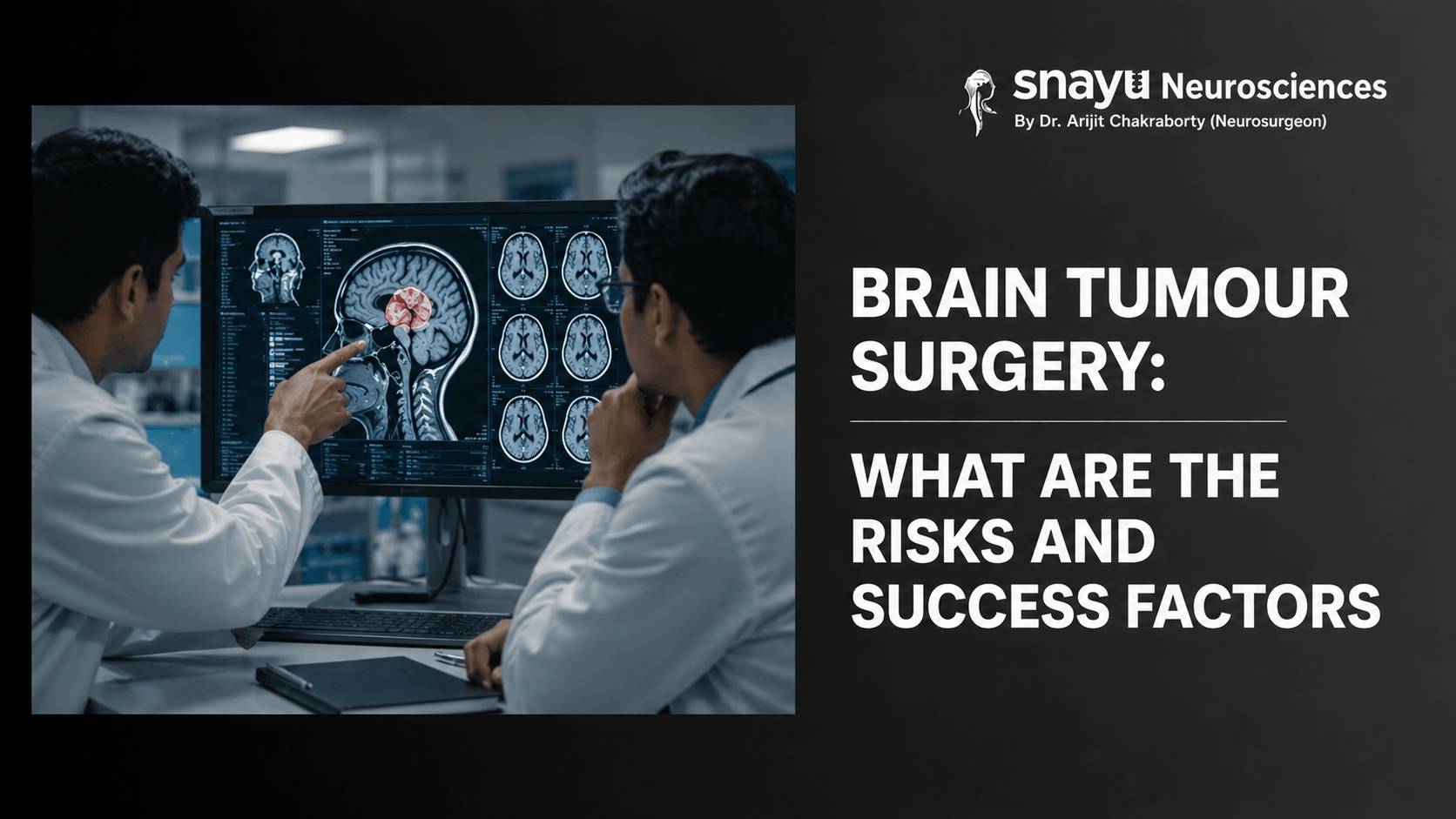
Brain tumour surgery requires specialised knowledge and careful preparation. Before surgery, the neurosurgical team studies MRI scans, CT scans, and other medical information to understand the tumour’s exact position and its relationship with important brain structures. Detailed planning helps determine an appropriate surgical route and treatment approach for each patient.
6. Modern Neurosurgical Technology
Advanced imaging, surgical microscopes, navigation systems, and specialised monitoring techniques can support greater precision during brain tumour surgery. Depending on the patient’s condition, modern technology may help the surgical team locate the tumour and protect important surrounding structures. The exact techniques used vary according to the tumour and surgical requirements.
Does Successful Surgery Mean Complete Tumour Removal?
Not necessarily. Complete tumour removal may be the goal in some cases, but attempting to remove every part of a tumour can sometimes increase the risk of damaging important areas of the brain. If a tumour is closely connected to structures controlling movement, speech, vision, or other essential functions, the surgeon may decide that partial removal is safer. In such situations, additional treatment may be recommended based on the tumour type and pathology results. Therefore, the success of brain tumour surgery should be measured by several factors, including safe tumour removal, protection of neurological function, symptom improvement, and the overall treatment plan.
How Can Patients Prepare for Brain Tumour Surgery?
Good preparation can help patients approach surgery with greater confidence. Before the procedure, patients should inform their medical team about existing health conditions, medications, allergies, and previous surgeries. Blood tests, imaging studies, and other assessments may be required to understand the patient’s overall health and plan the procedure. It is also important to understand the expected hospital stay, possible risks, recovery process, and follow-up requirements. Patients should carefully follow instructions regarding food, medicines, and lifestyle habits before surgery. Family support can also be valuable during hospitalisation and recovery.
What to Expect During Recovery After Brain Tumour Surgery
Recovery after brain tumour surgery is different for every patient. Some people gradually return to their normal activities within weeks, while others may need a longer recovery and rehabilitation period. The timeline depends on the tumour’s location, the type of operation, the patient’s overall health, and whether neurological symptoms were present before surgery. Temporary tiredness, headaches, weakness, or difficulty concentrating may occur during recovery. Follow-up appointments allow doctors to monitor healing and discuss pathology results. Some patients may also need physiotherapy, speech therapy, or occupational therapy to support their recovery.
Brain Tumour Care at Snayu Neurosciences
Choosing specialised care is an important part of brain tumour treatment. At Snayu Neurosciences, patients receive evaluation and treatment planning based on their symptoms, diagnosis, imaging findings, and individual medical needs. Dr. Arijit Chakraborty provides specialised neurosurgical care for patients with different brain conditions, with an emphasis on careful diagnosis and detailed treatment planning. The appropriate surgical technique is selected according to each patient’s specific condition, with the aim of balancing effective treatment and the protection of important neurological functions.
Final Thoughts on Brain Tumor Surgery
Brain tumour surgery can feel overwhelming, but understanding the possible risks and factors that influence success can make the treatment journey clearer. The tumour’s size, location, type, the patient’s overall health, surgical planning, and available technology can all affect the outcome. Importantly, successful surgery does not always mean complete tumour removal. In some cases, protecting essential brain functions while safely reducing the tumour may be the most appropriate goal. At Snayu Neurosciences, Dr. Arijit Chakraborty provides specialized neurosurgical evaluation and care based on each patient’s individual condition. If you or a family member has been diagnosed with a brain tumour, timely consultation and careful treatment planning can help you better understand the risks, possible outcomes, and available treatment options.
FAQs
1. Is brain tumour surgery always dangerous?
Brain tumour surgery has possible risks, but the level of risk is different for every patient. The tumour’s size, location, type, and the patient’s overall health all influence surgical complexity and possible outcomes.
2. Can every brain tumour be completely removed?
No. Some tumours can be completely removed, while others may be located too close to important brain structures. In such cases, partial removal followed by other treatments may be considered.
3. How long does recovery take after brain tumour surgery?
Recovery varies from person to person. Some patients recover within several weeks, while others may need a longer period and rehabilitation depending on the surgery and their neurological condition.
4. Does Snayu Neurosciences provide brain tumour care?
Snayu Neurosciences provides specialised evaluation and neurosurgical care for patients with different brain conditions. Treatment recommendations depend on each patient’s diagnosis, symptoms, imaging findings, and overall medical condition.
5. What is the most important success factor in brain tumour surgery?
There is no single success factor. Tumour location, size, type, patient health, surgical planning, and the ability to protect important brain functions all play important roles in determining the outcome.