A brain aneurysm is a potentially life-threatening condition that occurs when a weak spot in a blood vessel in the brain bulges and fills with blood. We know that many aneurysms remain undetected and cause no symptoms. Therefore, you need the best Brain Neurosurgeon in West Bengal to tackle this life-threatening disease.
However, a rupture can lead to a serious medical emergency known as a subarachnoid hemorrhage (SAH), which can result in brain damage or even death. Therefore, in this blog, Dr Arijit Chakraborty at Snayu will help you understand the symptoms, risk factors, and available treatments for Brain Aneurysms. As well as why it is crucial for early detection and prevention.
What is a Brain Aneurysm, According to the Best Brain Neurosugeon in West Bengal?
According to the best neurosurgeon in West Bengal, a brain aneurysm is a balloon-like bulge in the wall of an artery in the brain. This bulge can develop over time due to the weakening of the arterial wall. Aneurysms can vary in size and shape, with the most common type being the saccular (berry) aneurysm, which looks like a small sac attached to an artery. Moreover, there are other types, including fusiform aneurysms, which cause a section of the artery to widen, and mycotic aneurysms, which are rare and result from infections.
According to one of the best brain neurosurgeon in Kolkata, Dr Chakraborty that most of aneurysms do not rupture, but when they do, they can cause bleeding in the brain, leading to severe complications. Some aneurysms grow larger and put pressure on surrounding nerves, leading to symptoms even if they don’t rupture. This can be extremely life-threatening to the patient and will require immediate treatment.
What are the Symptoms of a Brain Aneurysm?
Observing their cases, the best brain neurogeneon in West Bengal tells that the unruptured aneurysms often go unnoticed because they may not cause symptoms. However, larger aneurysms or those pressing on nerves can lead to persistent headaches, blurred or double vision, pain behind the eyes, weakness or numbness in the face, and difficulty speaking or concentrating.
In particular, when an aneurysm ruptures, it results in sudden and severe symptoms that require immediate medical attention. The most common sign is an intense headache, often described as the worst headache of one’s life. Other symptoms include nausea, vomiting, a stiff neck, sensitivity to light, confusion, seizures, and loss of consciousness. If you or someone you know experiences these symptoms, contact Snayu immediately to prevent any misaps.
What are the Risk Factors Associated with Brain Aneurysms?
Dr Arijit says that several factors can increase the risk of developing a brain aneurysm. Medical conditions such as high blood pressure, atherosclerosis (narrowed arteries due to plaque buildup), polycystic kidney disease, and connective tissue disorders can contribute to weakened blood vessels. Lifestyle factors such as smoking, excessive alcohol consumption, and drug use (especially cocaine and amphetamines) also play a significant role.
Furthermore, according to the brain neurosurgeon in West Bengal, genetic factors and family history can also influence aneurysm development. If a close relative has had an aneurysm, your risk may be higher. Some individuals are also born with a congenital weakness in their arterial walls. Additionally, aneurysms are more common in people over 40, and women have a slightly higher risk than men.
How does the Best Brain Neurosurgeon in West Bengal Diagnose Brain Aneurysms?
The best brain neurosurgeon in West Bengal has to be extra careful because many brain aneurysms do not cause symptoms; they are often discovered incidentally during imaging tests for other conditions. For instance, at Snayu, we have diagnostic tools that include CT scans. The tool can detect bleeding in the brain and MRI scans and provide detailed images of the brain’s blood vessels. We also have Cerebral angiography, a test that involves injecting dye into the bloodstream, which allows our doctors to see the exact location and shape of an aneurysm. In cases where a rupture is suspected, a cerebrospinal fluid test may be performed to detect bleeding.
What are the Treatment Options for Brain Aneurysms Available at Snayu?
The treatment of a brain aneurysm depends on its size, location, and risk of rupture. For small, unruptured aneurysms that do not cause symptoms, our doctors may recommend watchful waiting, where the aneurysm is monitored through regular imaging tests. Dr Arijit Chakraborty also recommends lifestyle changes, such as maintaining healthy blood pressure, quitting smoking, and reducing alcohol intake, which can help prevent the aneurysm from growing.
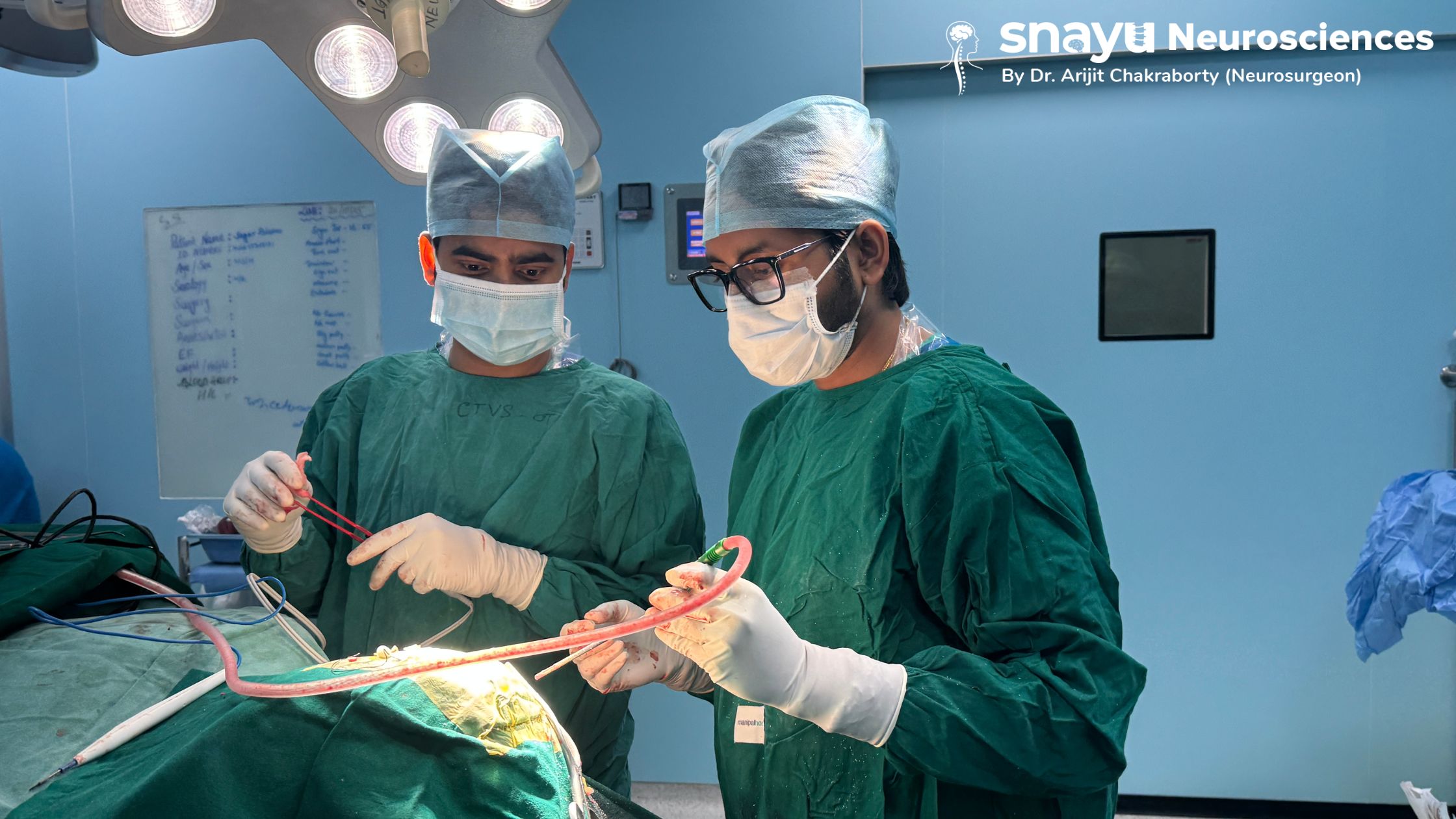
For larger or high-risk aneurysms, surgical interventions may be necessary. One option is clipping, a procedure in which a small metal clip is placed at the base of the aneurysm to stop blood flow and prevent rupture. Another minimally invasive option is endovascular coiling, where a catheter is inserted into an artery, and tiny coils are placed inside the aneurysm to block blood flow. Flow diverters, a newer treatment, involve placing a stent in the affected artery to redirect blood flow away from the aneurysm and promote healing.
In the case of a ruptured aneurysm, the best brain neurosurgeon in West Bengal performs emergency surgery, which is required to stop the bleeding and relieve pressure on the brain. Recovery may involve intensive rehabilitation to regain lost functions, as bleeding in the brain can cause neurological impairments.
Preventing Brain Aneurysms According to Brain Neurosurgeon in West Bengal
Although it is not always possible to prevent an aneurysm, according to Dr Chakraborty, adopting a healthy lifestyle can significantly reduce the risk. Maintaining normal blood pressure through diet, exercise, and stress management is crucial. Quitting smoking and avoiding drug use can help protect blood vessels from damage. Limiting alcohol intake, eating a nutritious diet, and engaging in regular physical activity also contribute to overall brain health.
Final Thoughts
Every brain neurosurgeon in West Bengal says brain aneurysms can be silent but are dangerous. While many do not cause symptoms, those that rupture can have devastating consequences. Being aware of the symptoms, risk factors, and treatment options can help with early detection and prevention. If you have a family history of aneurysms or are at high risk, talk to a doctor about regular screening and lifestyle changes to reduce your risk. If you ever experience symptoms of a ruptured aneurysm, seek medical attention at Snayu immediately—early intervention can be lifesaving.
FAQs
- Can a brain aneurysm be detected before it ruptures?
- Yes, many brain aneurysms are detected incidentally during imaging tests for other conditions. If there is a family history or risk factors, doctors may recommend CT scans, MRI scans, or cerebral angiography to diagnose an aneurysm before it ruptures.
- What are the warning signs of a brain aneurysm?
- Unruptured aneurysms may cause persistent headaches, blurred vision, pain behind the eyes, or facial numbness. A ruptured aneurysm presents with a sudden, severe headache (“thunderclap headache”), nausea, vomiting, stiff neck, seizures, and loss of consciousness.
- What is the safest treatment for a brain aneurysm?
- The safest treatment depends on the size, location, and risk of rupture. Options include:
- Clipping (a surgical procedure to close the aneurysm).
- Endovascular coiling (a minimally invasive method using coils to block blood flow).
- Flow diverters (stents placed to redirect blood flow).
For small, low-risk aneurysms, regular monitoring and lifestyle changes may be recommended.
- The safest treatment depends on the size, location, and risk of rupture. Options include:
- How long is the recovery after brain aneurysm surgery?
- Recovery time varies based on the treatment type and whether the aneurysm ruptured.
- Endovascular coiling: This requires a Shorter recovery (a few days to a few weeks).
- Clipping surgery: Longer recovery (several weeks to months).
If the aneurysm ruptures, rehabilitation may be needed for neurological recovery.
- How can I reduce my risk of developing a brain aneurysm?
- You can reduce your risk by:
- Maintaining healthy blood pressure
- Quitting smoking and avoiding alcohol abuse
- Eating a balanced diet and exercising regularly
- Managing stress and chronic conditions like diabetes
- Undergo screening if you have a family history of aneurysms
- You can reduce your risk by: