If you are someone who is or knows someone who is suffering from extremely painful and uncontrollable muscle spasm. You need to get in touch with the top brain doctor in Kolkata at Snayu Neurosciences ASAP! But first, you need to know what this condition is known as. It is called Neurovascular conflict, where an artery or vein lies too close to the root of a cranial nerve. A constant pulsation of the vessel against the nerve root takes place, causing extreme pain.
However, at Snayu, we implement Microvascular Decompression (MVD), also known as the Jannetta Procedure. This is a highly specialised neurosurgical technique used to treat certain chronic, debilitating pain and spasm syndromes. Usually caused by a blood vessel compressing a cranial nerve. The most common condition treated by MVD is Trigeminal Neuralgia (TN), characterised by sudden, severe, shock-like facial pain. It is also highly effective for conditions like Hemifacial Spasm and Glossopharyngeal Neuralgia.
What Does the Top Brain Doctor in Kolkata Say About Neurovascular Conflict?
According to a leading brain doctor in Kolkata at Snayu, symptoms in these conditions arise from an artery or vein positioned too close to the root of a cranial nerve as it exits the brainstem. The constant pulsation of the vessel against the nerve root gradually damages the protective sheath, known as myelin. This damage leads to misfiring of the nerve. Resulting in the severe pain associated with Trigeminal Neuralgia or the involuntary muscle spasms seen in Hemifacial Spasm.
| Affected Cranial Nerve | Condition Caused | Primary Symptoms | Characteristics of Symptoms |
| Trigeminal Nerve (CN V) | Trigeminal Neuralgia (TN) | Excruciating, sudden facial pain | Electric shock-like, stabbing pain in the face (cheek, jaw, lips, or nose), often triggered by talking, chewing, or touching a specific ‘trigger zone.’ |
| Facial Nerve (CN VII) | Hemifacial Spasm (HFS) | Involuntary twitching or spasm of facial muscles | Starts around the eye, gradually spreading to the cheek and mouth on one side of the face; spasms are irregular and often worsen with stress. |
| Vestibulocochlear Nerve (CN VIII) | Tinnitus and/or Vertigo | Tinnitus (ringing in the ear) or Positional Vertigo | Persistent, non-pulsatile ringing or buzzing sound in one ear; severe dizziness or spinning sensation triggered by head movements. |
| Glossopharyngeal Nerve (CN IX) | Glossopharyngeal Neuralgia (GN) | Severe pain in the throat, tonsil, or ear | Sharp, stabbing pain usually starting in the throat or base of the tongue, often triggered by swallowing, talking, or coughing. |
How does Our Top Brain Doctor in Kolkata Carry Out the MVD Procedure?
MVD is a significant neurosurgical procedure since it involves a craniotomy. This means making a small opening in the skull to reach the brainstem. It is an open surgery done under general anaesthesia, demanding a high level of surgical skill and precision. But thanks to advanced microscopic and monitoring techniques, it’s considered very safe when done by an experienced neurosurgeon.
- Access: The patient lies on their side while the surgeon makes a small cut behind the ear and carefully creates a tiny opening in the skull (craniotomy) to reach the base of the brain, known as the posterior fossa.
- Visualisation and Decompression: With a high-powered operating microscope and specialised micro-instruments, the surgeon carefully works their way to the compressed nerve, such as the Trigeminal nerve in TN cases. The problematic blood vessel, often the Superior Cerebellar Artery, is gently located and moved away from the nerve root.
- Insulation: A small, soft cushion made of non-absorbable material, usually Teflon felt, is placed between the nerve and the blood vessel. This acts as a lasting barrier, preventing the vessel’s pulsations from irritating the nerve.
- Closure: The surgeon closes the brain’s protective layer (dura), replaces the small piece of skull, and stitches the incision. The main goal is to fix the root cause, the compression, while avoiding any harm to the nerve itself.
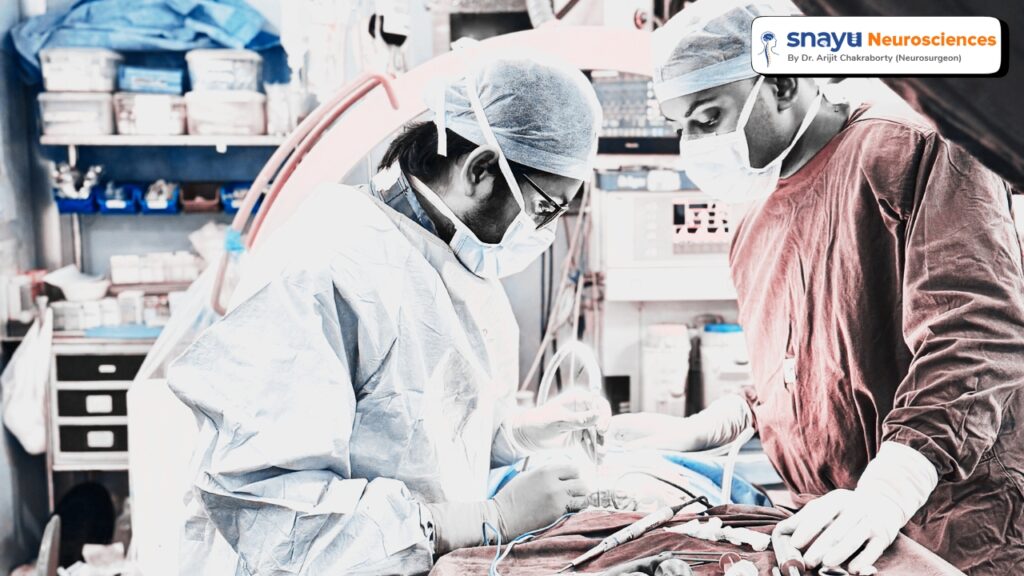
What are the Benefits of MVD, According to Our Top Brain Doctor in Kolkata?
MVD is often chosen over other treatments because of its lasting and curative potential. It’s known for offering the highest long-term pain relief rates for Trigeminal Neuralgia. With initial success (immediate pain relief) in about 80% to over 90% of cases. What makes it stand out is that it’s the only treatment that tackles the root cause directly.
Unlike ablative procedures such as radiofrequency rhizotomy or radiosurgery, which intentionally damage the nerve to block pain signals and often result in lasting facial numbness, microvascular decompression (MVD) preserves the nerve’s integrity. Consequently, patients retain normal facial sensation.
When our surgeons perform a successful operation, MVD can even offer years of complete pain relief. Long-term studies show that a high percentage of patients maintain good pain control even ten years after surgery. It also lets patients stop or greatly reduce the use of high-dose anti-seizure medications, like Carbamazepine, which often cause troublesome side effects such as fatigue, dizziness, and liver problems.
Furthermore, patients who have undergone MVD usually stay in hospital around 2 to 4 days, with patients first spending a short time in the ICU for close monitoring before moving to a regular room. During recovery, most people can get back to light daily activities within 1 to 2 weeks, while full recovery, including returning to work and exercise, typically takes about 4 to 6 weeks.
Why Snayu Neurosciences in Kolkata is the Best Place for MVD?
MVD is a delicate surgery that requires exceptional experience and specialised equipment. Snayu Neurosciences in Kolkata stands out as a leading clinic for this complex procedure by offering expertise in Cranial Nerve and Functional Neurosurgery.
Our surgical team at Snayu Neurosciences, led by renowned neurosurgeons, specialises in complex functional neurosurgery, including procedures around the brainstem and cranial nerves. This high degree of specialisation is paramount for the precision required in MVD.
Remember, success in MVD is directly linked to the surgeon’s ability to visualise and manoeuvre in the small, deep operative field. Therefore, at Snayu Neurosciences, we utilise:
- High-Definition Operating Microscopes: Providing magnified, three-dimensional views essential for identifying and separating tiny vessels from the nerve.
- Intraoperative Neurophysiological Monitoring (IONM): This technology continuously monitors nerve function (e.g., the facial and auditory nerves) during the surgery, ensuring the nerve is protected from damage while the decompression is performed.
Conclusion
What sets us apart from other establishments is our focus on achieving not just temporary relief, but a lasting cure while maintaining the patient’s quality of life. By committing to minimally invasive, high-precision techniques, we at Snayu Neurosciences aim to reduce complication rates and ensure the highest chance of long-term success. Therefore, in case you know someone or are the one who is suffering from neurovascular conflict, our top brain doctor in Kolkata is here to help you, so contact us now!
FAQs
- What conditions can MVD treat besides Trigeminal Neuralgia?
- MVD is often the go-to treatment for those dealing with Hemifacial Spasm, a condition where the facial muscles twitch or spasm involuntarily due to a blood vessel pressing on the facial nerve (Cranial Nerve VII). Another uncommon condition is Glossopharyngeal Neuralgia, which causes sharp, stabbing pain in the throat, tongue, tonsil area, or ear, and is triggered by compression of the Glossopharyngeal nerve (Cranial Nerve IX).
- Is it possible for the pain to return after a successful MVD?
- While MVD generally provides the best long-term results, there’s about a 15–20% chance of recurrence over a decade. This can happen if the Teflon cushion shifts, the blood vessel moves back toward the nerve, or scar tissue develops. If the pain comes back, options include a repeat MVD or other treatments like radiosurgery.
- What is the difference between MVD and Gamma Knife Radiosurgery for Trigeminal Neuralgia?
- Gamma Knife is a non-invasive radiation treatment that creates a lesion on the nerve to block pain signals. It doesn’t address the underlying compression, and its pain relief may not last as long as with MVD. There’s also a higher long-term risk of facial numbness. In contrast, MVD corrects the root cause, vessel compression, to cure the condition while preserving nerve function, though it does require surgery and anesthesia.