For generations, brain and spinal surgery were associated with large incisions, significant blood loss, and prolonged, painful recoveries. While traditional open surgery was effective, it often intimidated patients and resulted in a long and difficult recovery process. Fortunately, advancements in surgical technology have ushered in a new era of neurosurgery: the age of minimally invasive neurosurgery in Kolkata.
At Snayu Neurosciences, we utilise advanced instruments, cutting-edge imaging, and innovative techniques to offer minimally invasive neurosurgery. This approach provides numerous compelling benefits that are transforming patient care and outcomes. In this article, under the guidance of Dr. Arijit Chakraborty, we will explore all the advantages of minimally invasive neurosurgery in Kolkata.
What is Minimally Invasive Neurosurgery in Kolkata?
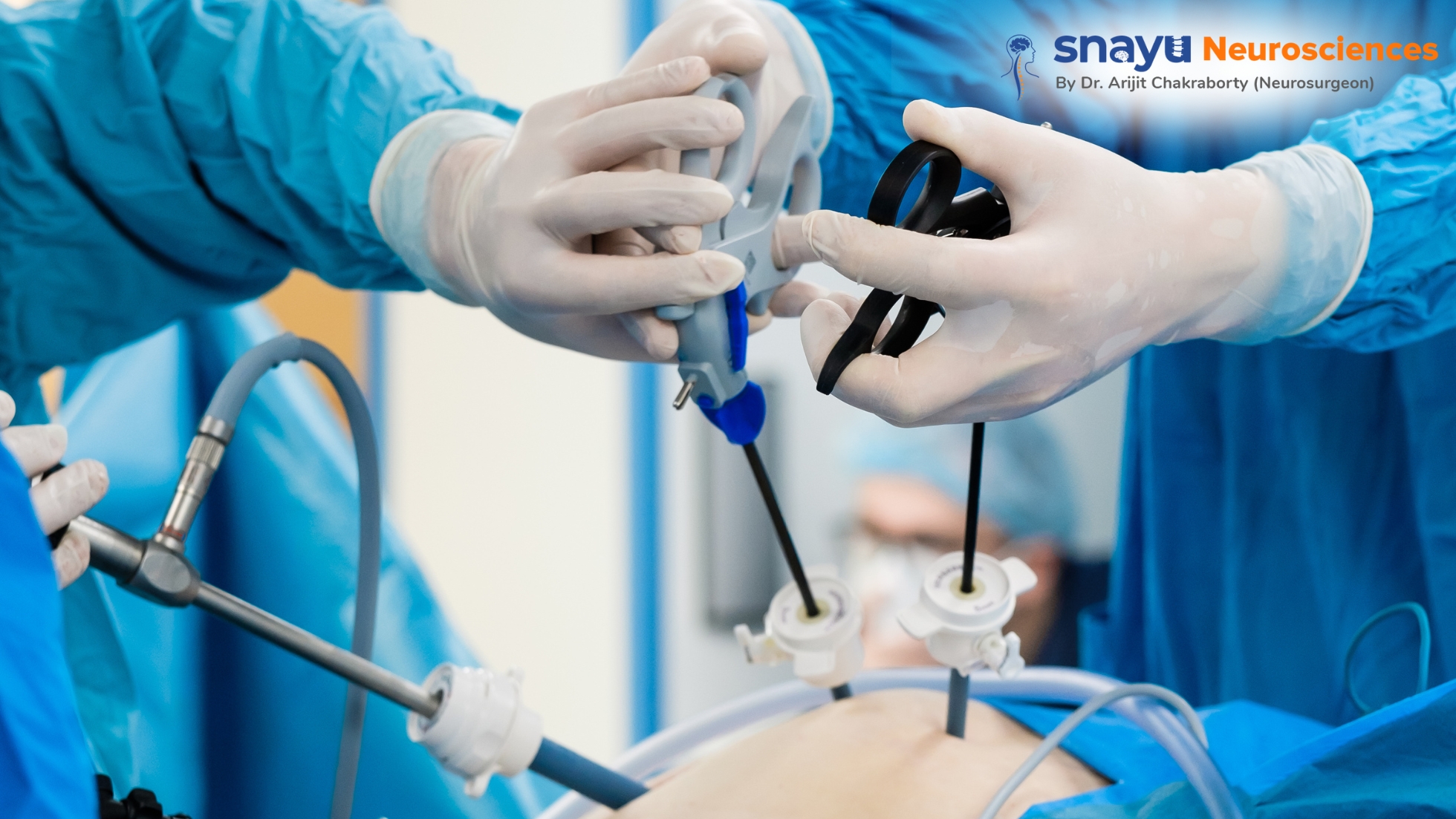
Minimally invasive neurosurgery (MIS) is a broad term for surgical techniques that allow neurosurgeons to access and treat conditions of the brain and spine. The surgery takes place through small, precise openings rather than large incisions. Instead of cutting through significant layers of muscle, tissue, and bone, surgeons use specialised tools. These tools include endoscopes (tiny cameras on a flexible tube) and microscopes to navigate to the surgical site. The use of advanced guidance systems, such as real-time imaging (fluoroscopy) and robotic assistance. Such advances further enhance a surgeon’s ability to operate with unparalleled precision.
| Tool/Technology | Description |
| Endoscopes | A thin, flexible or rigid tube with a light source and a high-definition video camera at its tip. Some have a working channel for surgical instruments. |
| Surgical Microscopes | High-powered microscopes designed for surgical use, offering high magnification and illumination. |
| Tubular Retractors | A system of progressively larger tubes that are inserted through a small skin incision. They are often used in minimally invasive spine surgery. |
| Image-Guided Navigation Systems | A system that integrates pre-operative images (e.g., MRI, CT scans) with real-time patient data in the operating room. Often referred to as “surgical GPS.” |
| Robotic Assistance | Robotic systems that assist the surgeon with surgical planning, instrument placement, and precision. |
| Specialised Microsurgical Instruments | Long, slender instruments like forceps, scissors, and dissectors, specifically designed to fit through the small working channels of endoscopes or tubular retractors. |
| Laser Ablation Tools | A tool that uses a laser to precisely deliver heat to a targeted area of tissue. |
| Intraoperative Imaging (iMRI/iCT) | Imaging technology (e.g., MRI, CT scans) is available in the operating room that can be used during the procedure. |
What are the Key Advantages of Minimally Invasive Neurosurgery?
The shift from traditional open surgery to minimally invasive neurosurgery in Kolkata is driven by a number of significant benefits for the patient. For instance, surgeons can reduce trauma to the body through smaller incisions and Less scarring. This is possible because MIS utilises incisions that are often less than an inch long. This not only results in less noticeable scarring but, more importantly, causes less damage to the skin, muscles, and other soft tissues that surround the brain or spine.
Such surgery also helps surgeons to avoid large, sweeping cuts. As well as helping them to navigate through natural corridors or small openings. Thus, minimally invasive neurosurgery significantly reduces blood loss during the procedure. This lowers the risk of needing a blood transfusion and minimises the strain on the patient’s body during the operation.
On the other hand, the core philosophy of MIS is to limit the disruption of healthy tissue. For example, in spinal surgery, a tubular retractor is often used to gently push muscles aside, creating a small tunnel to the spine. In contrast, traditional surgery would require these muscles to be cut and retracted, which can lead to more post-operative pain and a longer healing process.

How is Minimally Invasive Neurosurgery in Kolkata Responsible for Faster and More Comfortable Recovery?
Because there is less damage to healthy tissue and fewer nerve endings are disrupted. Thus, patients who undergo minimally invasive neurosurgery in Kolkata at Snayu Neurosciences typically experience significantly less pain after surgery. This reduces the need for strong pain medications, which can have their own set of side effects.
Furthermore, with less pain and less physical trauma, our patients are often able to get back on their feet much more quickly. Many minimally invasive procedures are performed on an outpatient basis, while others may only require a one- or two-day hospital stay. This is a stark contrast to traditional surgeries, which often necessitate a hospital stay of a week or more for monitoring and initial recovery.
Additionally, the expedited recovery process means patients can get back to their normal lives sooner. Many of our patients return to their desk jobs within a couple of weeks. Moreover, they can also make a full return to all activities, including strenuous exercise. Such recovery is often possible in a matter of months, as opposed to the longer timelines associated with traditional open procedures.
Snayu Neurosciences’ Enhanced Surgical Precision Reduces any Risks
Advanced imaging technologies and high-definition cameras used in MIS by Snayu Neurosciences provide a magnified, real-time view of the surgical site. Our surgeons can see delicate nerves and blood vessels with exceptional clarity, allowing for more accurate and precise work. Such precise surgery lowers the risk of complications.
In particular, the smaller incisions and reduced tissue disruption of minimally invasive neurosurgery in Kolkata lead to a lower risk of post-operative complications, such as infection. Additionally, the enhanced precision helps to minimise the risk of damage to surrounding healthy brain or spinal structures. Lastly, for some patients who may not be candidates for traditional open surgery due to their age or other health conditions, a minimally invasive approach can make a necessary procedure possible.
Conditions Treated with Minimally Invasive Neurosurgery in Kolkata
The applications of minimally invasive neurosurgery in Kolkata are constantly expanding, but it is already used to treat a wide range of neurological and spinal conditions at Snayu Neurosciences. Let us have a look at the conditions that our surgeons take care of:
- Brain Tumours: Certain tumours, particularly those located at the base of the skull or in other accessible areas. Such complications can be removed using endoscopic or “keyhole” techniques.
- Spinal Disorders: MIS is a common approach for conditions such as herniated discs, spinal stenosis (narrowing of the spinal canal), and spinal fusions.
- Hydrocephalus: A condition characterised by an accumulation of cerebrospinal fluid in the brain, often treated with an endoscopic ventriculostomy.
- Aneurysms and other Vascular Abnormalities: Endovascular techniques can be used to treat certain aneurysms by navigating through the body’s blood vessels.
- Movement Disorders: Procedures like deep-brain stimulation for Parkinson’s disease can be performed with minimally invasive techniques.
Conclusion
While not every neurological condition is suitable for a minimally invasive approach. However, the growing list of treatable ailments and the clear patient benefits make it a powerful and increasingly common option. The ability to achieve excellent outcomes with less pain, fewer complications. As well as a faster return to an active life, minimally invasive neurosurgery in Kolkata is a true game-changer. As technology continues to advance, this surgical revolution will undoubtedly continue to offer new hope and better solutions for patients with complex neurological and spinal issues. On the other hand, under the guidance of the minimally invasive neurosurgery expert, Dr Arijit Chakrabory, Snayu Neurosciences will continue to offer top-notch services to our patients.
FAQs
- What’s the main difference between minimally invasive and traditional surgery?
- The key difference is the size of the incision and the resulting tissue damage. Minimally invasive surgery uses small incisions and specialised tools to access the surgical site, causing much less trauma to muscles and other tissues. Traditional open surgery requires a large incision, leading to more tissue disruption, blood loss, and a longer, more painful recovery.
- Is this type of surgery an option for everyone?
- No, it’s not suitable for every patient or every condition. Our neurosurgeon will determine if you are a good candidate based on the specific condition, its location, and its complexity. Large or very difficult-to-reach tumours, for example, may still require a traditional approach.
- What are the biggest benefits of this approach?
- The primary benefits are a faster recovery, less post-operative pain, and a shorter hospital stay. Patients also experience less blood loss and a lower risk of infection. This allows you to get back to your normal life much more quickly.
- How long is the recovery time?
- Recovery is typically much faster than with traditional surgery. Most patients are discharged from the hospital within one to two days and can return to light activities in a few weeks. Full recovery and a return to strenuous activities may take a few months, which is still a significant improvement over traditional methods.
- Is it as effective as traditional open surgery?
- Yes, when used for the right conditions, minimally invasive surgery is just as effective as, and sometimes more effective than, open surgery. The advanced imaging and precision tools used in these procedures allow surgeons to operate with exceptional accuracy, helping to ensure the targeted condition is fully treated while minimising damage to healthy tissue.